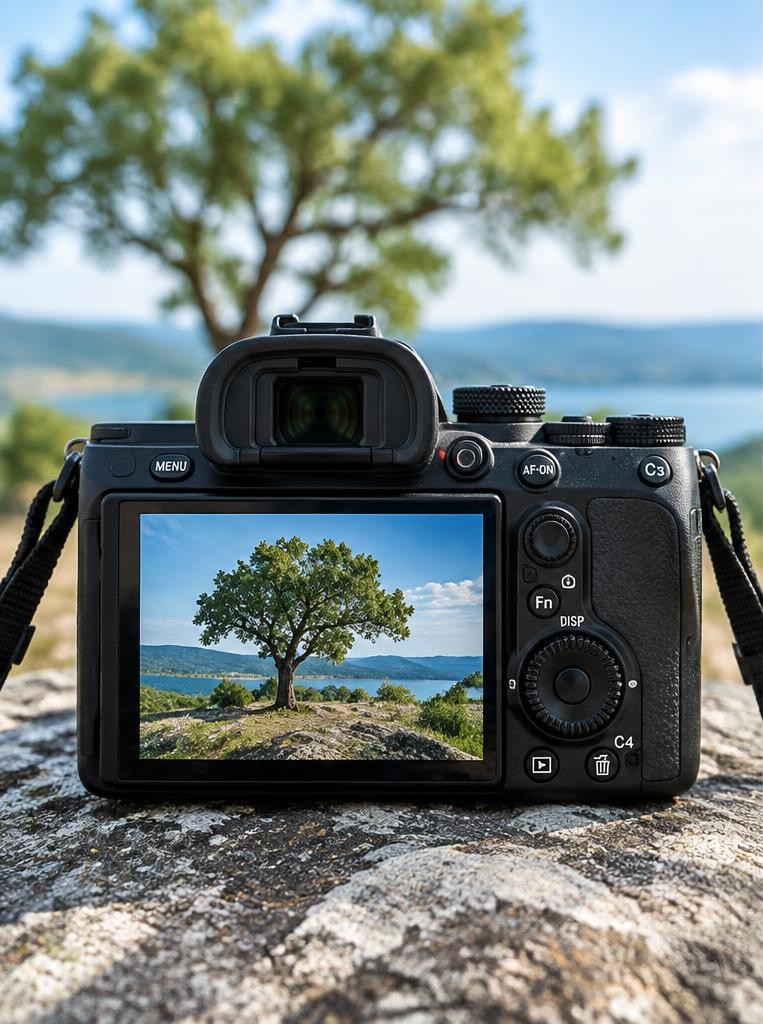
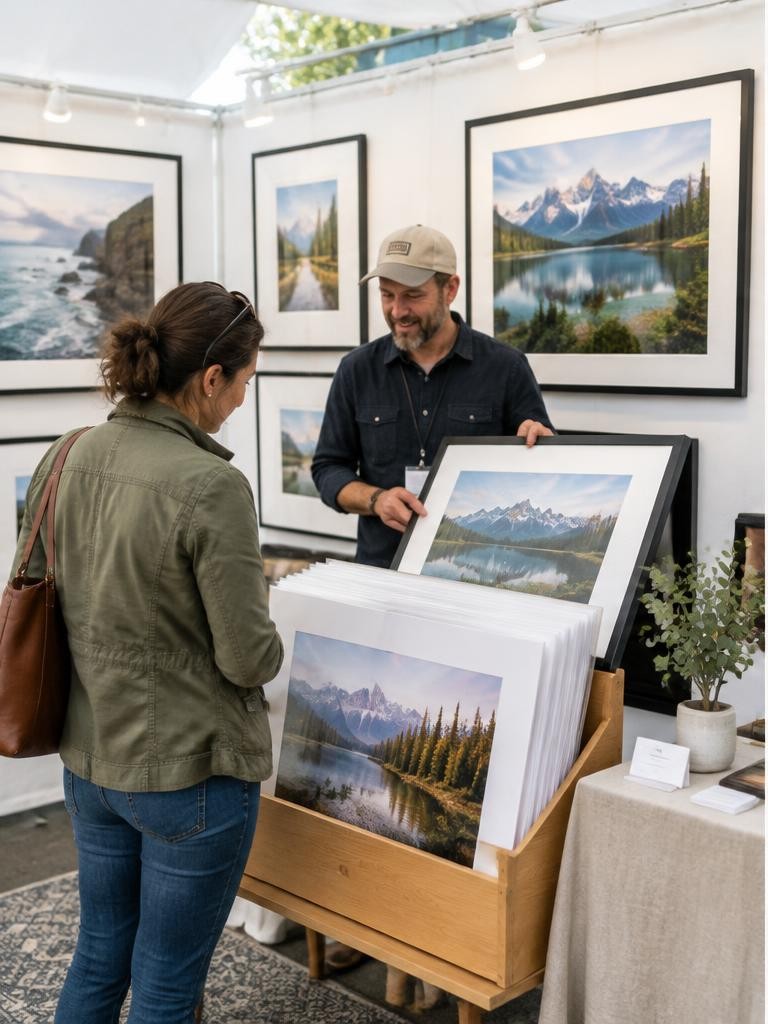
Sell photography prints by choosing a coherent collection, confirming your rights, producing physical proofs, and making ordering and delivery easy to understand. Begin with a manageable number of images, sizes and finishes rather than a sprawling catalogue. Your first objective is a repeatable service: the buyer receives the photograph, material, dimensions and delivery experience described. Demand is uncertain, so treat an initial release as a learning exercise rather than guaranteed income. This guide uses invented planning figures, not market prices or forecasts. Adapt contracts, tax arrangements and consumer policies to your jurisdiction.
011. Define the buyer and the intended space
Write one sentence describing who the collection serves and where it might hang. A series of quiet woodland details for domestic interiors needs different presentation from large architectural photographs for offices.
Decide whether the buyer is choosing an individual image, a coordinated set or a commissioned print. Then ask what information would reduce uncertainty: dimensions above furniture, surface texture, framing requirements or delivery timing.
Avoid assuming social-media engagement equals purchasing intent. Conversations, enquiries and completed orders provide different kinds of evidence, and none alone proves that future demand will continue.
022. Edit a collection with a clear identity
Select six to twelve photographs that share a subject, treatment or visual rhythm. Remove near-duplicates unless they serve a deliberate sequence.
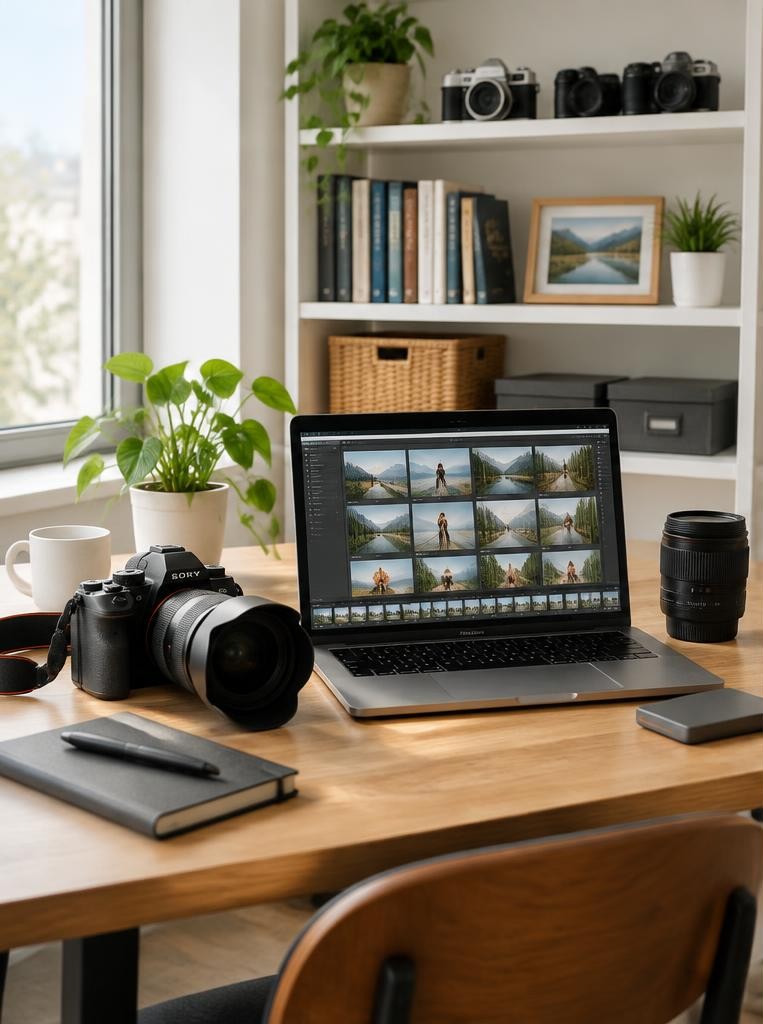
Review each image for distracting retouching, dust, edge problems and suitability at the intended output size. Make a contact sheet and compare the collection as a whole before preparing individual listings.
Give images distinctive titles or reference codes so customers cannot confuse similar scenes. Keep an organised master-file archive and a separate export folder; the file used for a small website preview should not accidentally become the production master.
033. Check ownership and permissions
Confirm that you can reproduce and sell every selected image. In the United States, the Copyright Office explains that original photographs are protected when fixed, and that photographers generally own their work unless an exception such as work made for hire applies.
Registration provides additional legal benefits. These are US rules, not universal legal advice.
Review employment agreements, commissions, licences and any relevant permissions separately. Copyright ownership does not automatically resolve privacy, publicity, property-access or trademark issues.
If a sensitive commercial use is unclear, seek qualified local advice before publishing the listing.
044. Choose the product before choosing the storefront
Define paper type, image dimensions, sheet dimensions, border, framing and whether the work is signed. Explain the printing process accurately without making unsupported permanence claims.
A paper described as archival does not establish a guaranteed lifespan for every ink, display environment and production method. Decide between open editions and a genuinely controlled limited edition.
If limiting an edition, document its size and explain whether different sizes count together or separately. Maintain a ledger.
Do not manufacture scarcity by quietly issuing additional copies under substantially identical edition terms.
055. Proof the actual output
Order a physical proof in the intended material and, where practical, the intended size. Follow the laboratory’s current instructions for file format, colour space, sharpening and borders.
Soft proofing can help when suitable profiles are available, but a screen is not a substitute for inspecting the product. Check shadow detail, skin tones where relevant, gradients, crop and surface reflections under reasonable viewing light.
For an illustrative resolution calculation, 3,600 pixels divided by a chosen 300 pixels per inch produces 12 inches. That arithmetic describes sampling density, not an automatic quality threshold.
066. Calculate contribution before committing stock
Use hypothetical cost units to separate variable costs from overhead. Suppose one order produces 100 units of revenue and requires 28 for printing, 7 for packaging, 12 for delivery, 4 for transaction charges and 9 reserved for expected replacement costs.
The contribution is 100 − 28 − 7 − 12 − 4 − 9 = 40 units before fixed costs, labour and tax. If release-specific fixed costs are 240 units, six such orders cover those fixed costs only.
This is planning arithmetic, not a recommended selling price, margin benchmark or promise of demand.
077. Decide how production and fulfilment will work
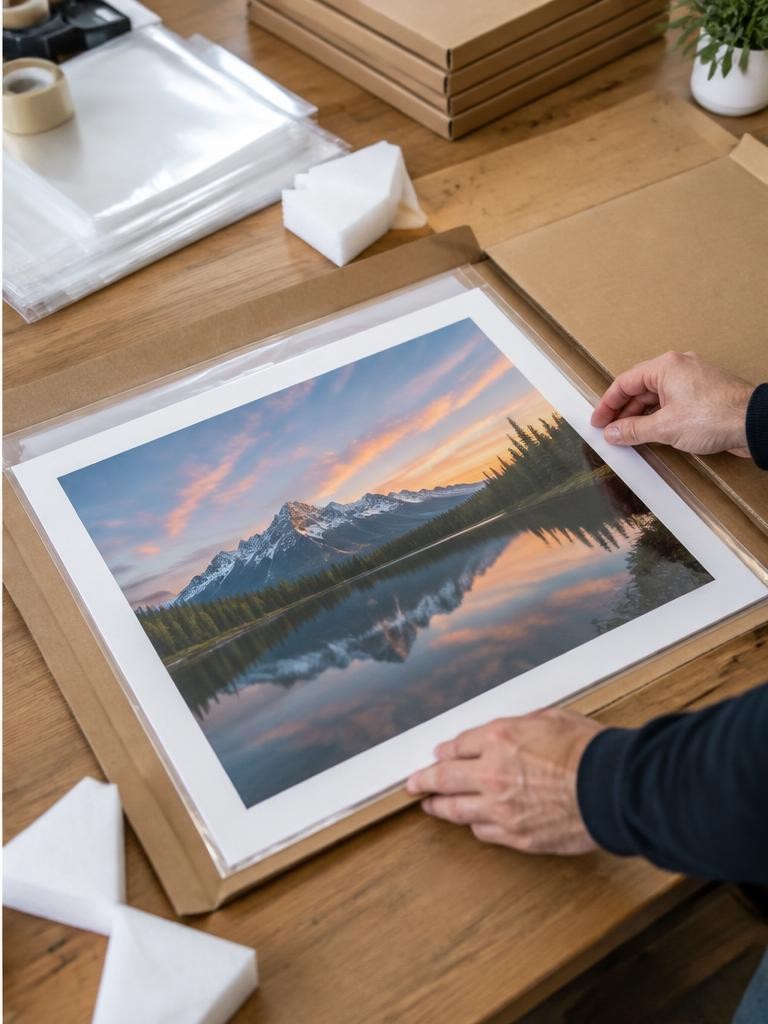
Compare printing to order with holding inventory. Printing to order reduces unsold stock but depends on laboratory turnaround and your proofing arrangements.
Inventory gives you inspection and signing control but ties up money and requires suitable storage. Ask who replaces damaged items, whether packaging carries your branding, how tracking is supplied and where customer data travels.
Walk through an international order separately because customs charges, delivery rules and returns may differ. Place a sample order through the complete workflow before asking customers to rely on it.
08Illustrative scenario: a coastal collection
A fictional photographer prepares eight coastal images in two sizes and one unframed paper finish. That creates sixteen image-and-size combinations rather than dozens of competing finishes.
Three prospective buyers ask whether the larger sheet fits a standard frame. The photographer adds a dimension diagram and clarifies that the image area is smaller than the paper.
One proof reveals a dark foreground, so the export is adjusted and proofed again. Nothing here establishes a sales result: the scenario illustrates how a small release makes product questions and production corrections easier to manage.
098. Build listings that remove ambiguity
Show the photograph, a detail of the surface and a clearly labelled scale illustration. Distinguish a real product photograph from a digital room mock-up, and do not imply that a frame is included when it is not.
State orientation, paper and image dimensions, border, production lead time, delivery coverage and edition information. Explain that screens and lighting affect appearance without using that statement to excuse a materially inaccurate product.
Put cancellation, returns and damage-reporting information where buyers can find it before payment. Check local mandatory consumer rights rather than copying another shop’s policy.
109. Pack, document and care for prints
Choose packaging that prevents bending, abrasion and moisture exposure in the intended delivery route. Keep labels and adhesive away from the image surface.
The Library of Congress recommends clean handling, avoiding the image area and using appropriate housing; its guidance also emphasises that photographic materials differ. Do not turn general conservation advice into a universal claim about every print product.
Record order identifiers, inspection date, packaging method and tracking. Include concise care guidance appropriate to the supplied materials, and avoid recommending cleaning treatments that your producer has not approved.
1110. Launch with useful context
Present why the series exists, how the images relate and what the buyer receives. Send permission-based announcements and link directly to the collection rather than forcing visitors through unrelated galleries.
If approaching a venue or independent retailer, prepare dimensions, handling information and written terms covering commission, payment, insurance and unsold work. Count these arrangements as operational decisions, not automatic exposure benefits.
Track enquiries, orders, production time and fulfilment problems in the same place. Review results after a defined period without interpreting a small sample as a stable conversion rate.
Troubleshooting
12Troubleshooting: locate the actual obstacle
If visitors view images but do not order, check whether delivery coverage, dimensions or total checkout charges are unclear before changing the artwork. If prints arrive darker than expected, investigate export settings, proofing and viewing conditions with the laboratory.
If orders are damaged, examine packaging and handling evidence instead of repeatedly dispatching identical replacements. If administration consumes the available working time, reduce variants or simplify dispatch days.
Keep a short issue log containing the symptom, suspected cause, corrective action and next check. Change one controllable factor at a time where possible.
FAQ
13FAQ and practical exercise
Should you start with limited editions? Only if you want to maintain a reliable edition policy; open editions are a valid choice. Must you buy a printer? No: an external laboratory can handle production, while you remain responsible for the customer promise. Does selling a physical print transfer copyright? Do not assume so; state the transaction clearly and verify local law.
Exercise: create one complete listing, a cost worksheet and a packing checklist. Ask someone unfamiliar with your work to identify the image size, included items, dispatch expectation and damage-contact route without extra explanation.
Sources & further reading
These references support the technical explanations. Exercises and starting settings are illustrative and should be adapted to your equipment and conditions.
- US Copyright Office: What Photographers Should Know about Copyright
- Library of Congress: Care, Handling, and Storage of Photographs
Free resources from LensSuite
Was this guide helpful?