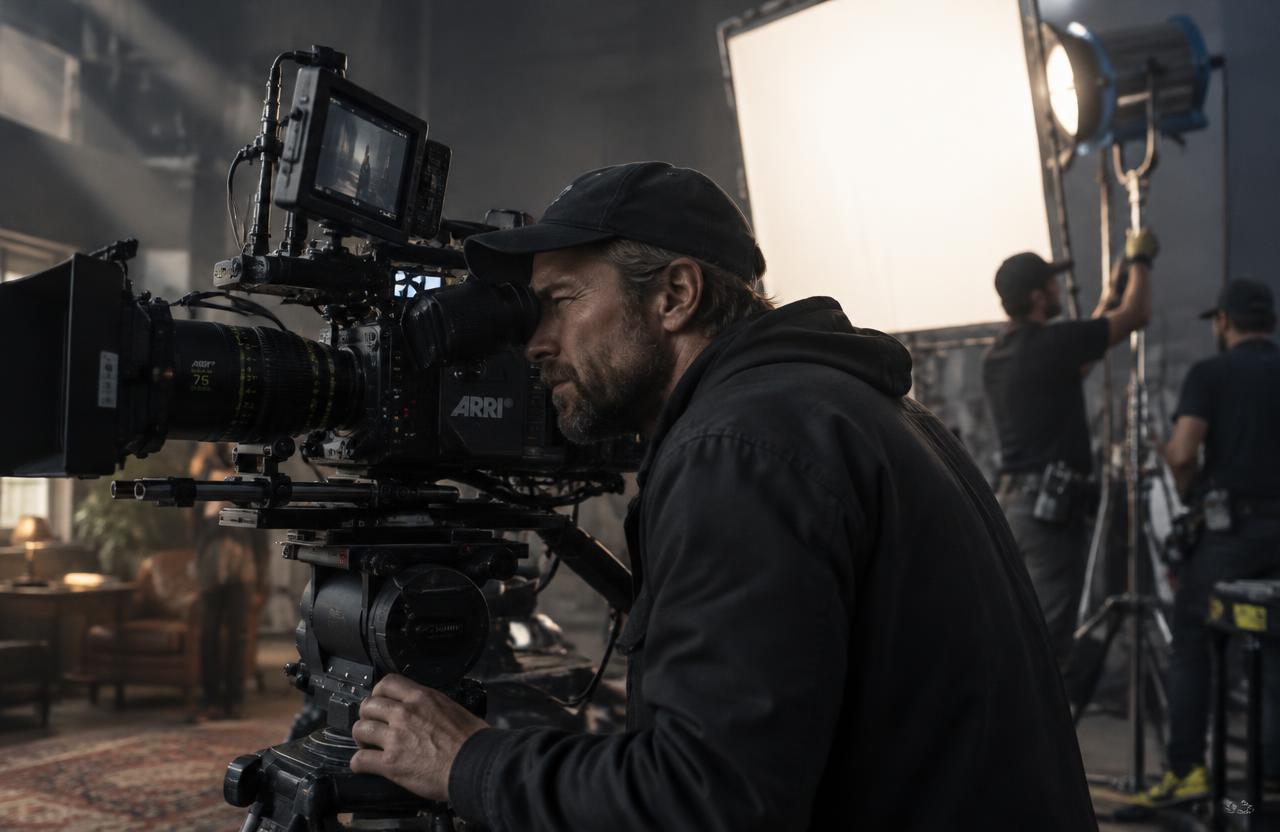
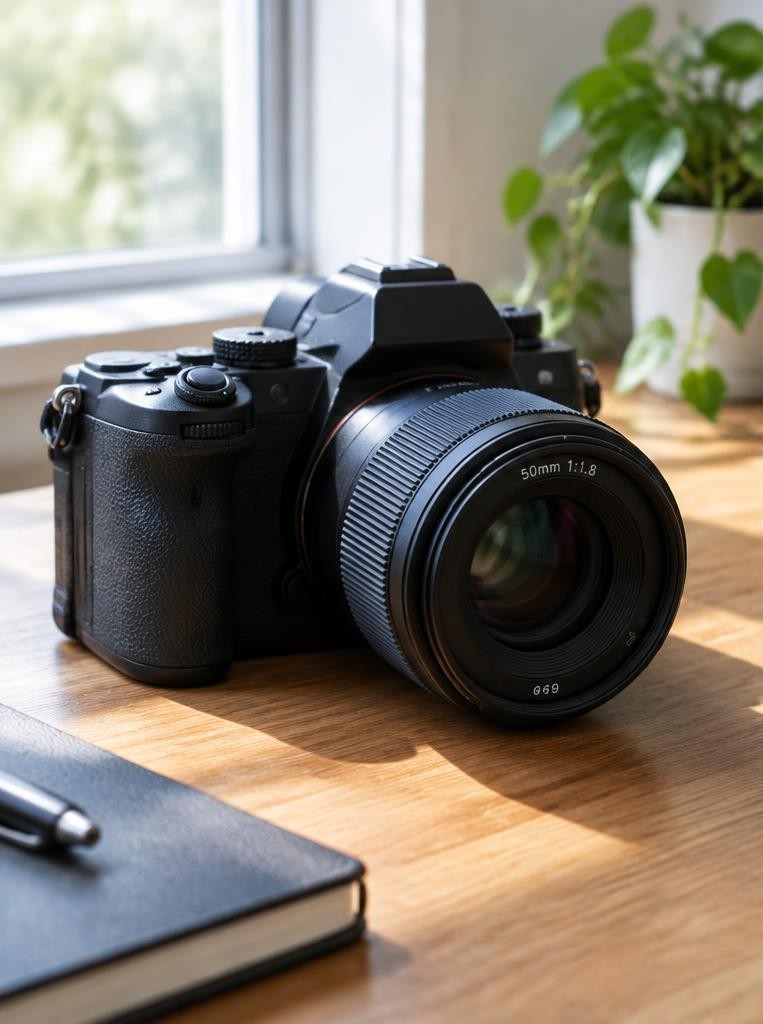
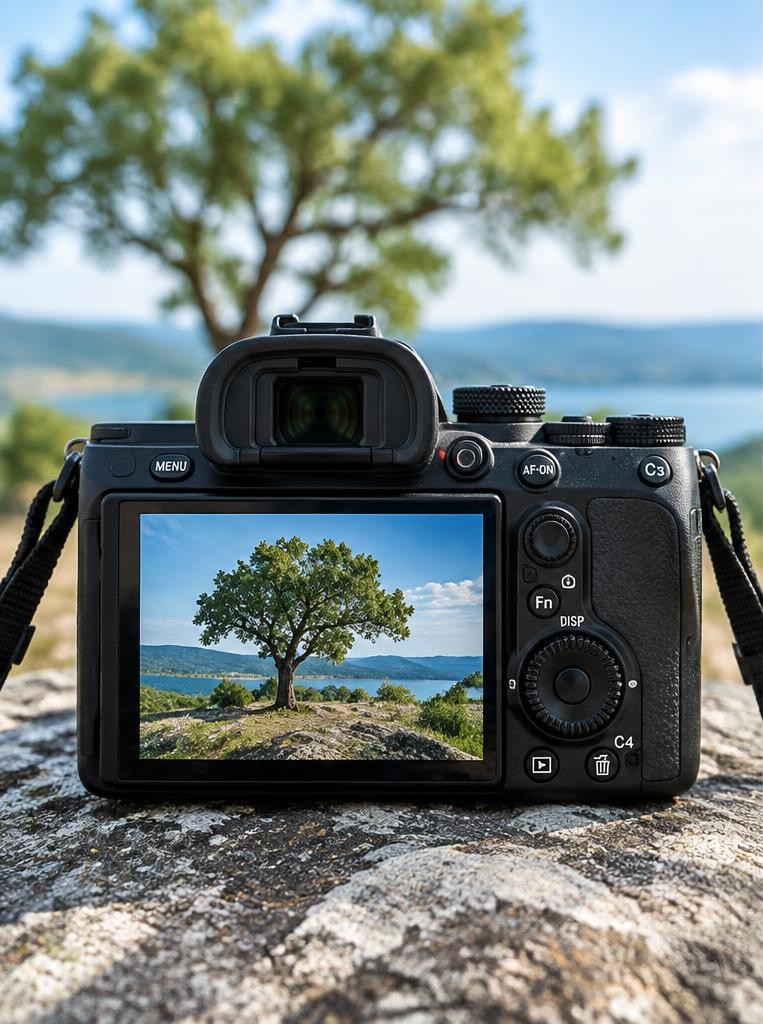
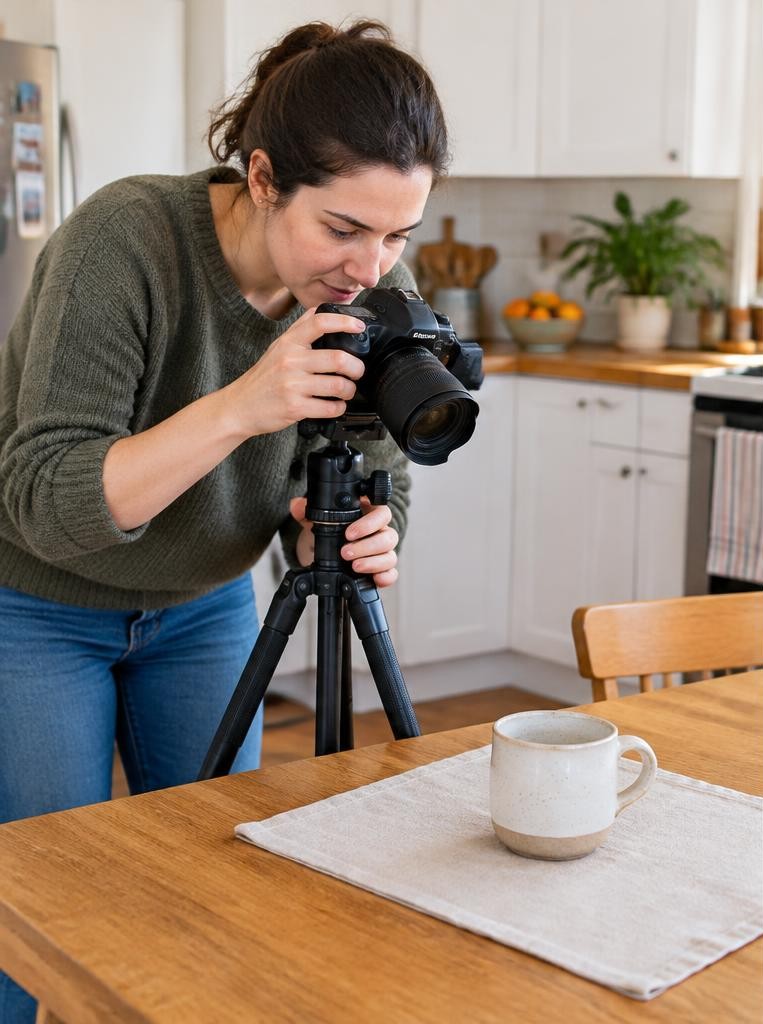
You can begin learning photography without prior paid work, but running a business also requires dependable communication, planning, editing and delivery. Do not market yourself as an established specialist before you can consistently produce the work you promise. Instead, choose one accessible area to learn—such as simple product images, portraits in available light or small community events—and build skill through deliberate practice. Separate technical uncertainty from business uncertainty. A new photographer may understand camera exposure but not quoting or client communication; another may have people skills but need more practice with focus and colour. Write down what you can already do, what must improve and which projects are too risky to accept yet.
Try this
01Learn with a defined practice plan
Use a repeatable exercise rather than taking many unrelated photographs. Choose one subject and practise focus, exposure, composition and light under changing conditions.
Make contact sheets, compare images at full size and write down what you would change. Repeat the exercise after studying a reliable manual or course.
The aim is not to memorise settings but to produce predictable results and diagnose errors.
An illustrative four-week plan might devote two short sessions weekly to photographing the same subject, one session to reviewing files and one to practising a client-like brief. The schedule is only an example, not a proven minimum.
Adjust it to available time and the complexity of the genre.
02Study the work you intend to sell
Choose a narrow service and identify its real requirements. Portrait work calls for directing people and managing expressions; events require anticipation, low-light handling and fast backup; product assignments may depend on reflections, colour consistency and precise cropping.
Real-estate photography adds accurate verticals, careful lighting and coordination with property access. A camera alone does not establish readiness.
Use public portfolios to understand common deliverables, but do not copy another photographer’s images, distinctive presentation or client claims. Study technical decisions—light direction, framing and sequence—and then make original practice work.
If you cannot reliably create the output a paying client needs, keep practising or assist an experienced photographer where appropriate.
03Practise safely and seek feedback
Start with personal objects, volunteer arrangements with clear expectations, or a supervised second-shooter role where responsibilities are agreed in advance. Do not misrepresent unpaid work as a paid commission.
Ask for specific feedback: Are important details sharp? Is skin tone consistent?
Does the sequence tell the story? Are crops suitable for the intended use?
When photographing people, explain the purpose, intended use and whether images might be published. Obtain meaningful permission before using identifiable photographs in a portfolio, and follow relevant local privacy, consent and child-safeguarding requirements.
These rules vary by place and situation; a casual practice session does not remove the need to respect subjects.
04Build a portfolio with transparent labels
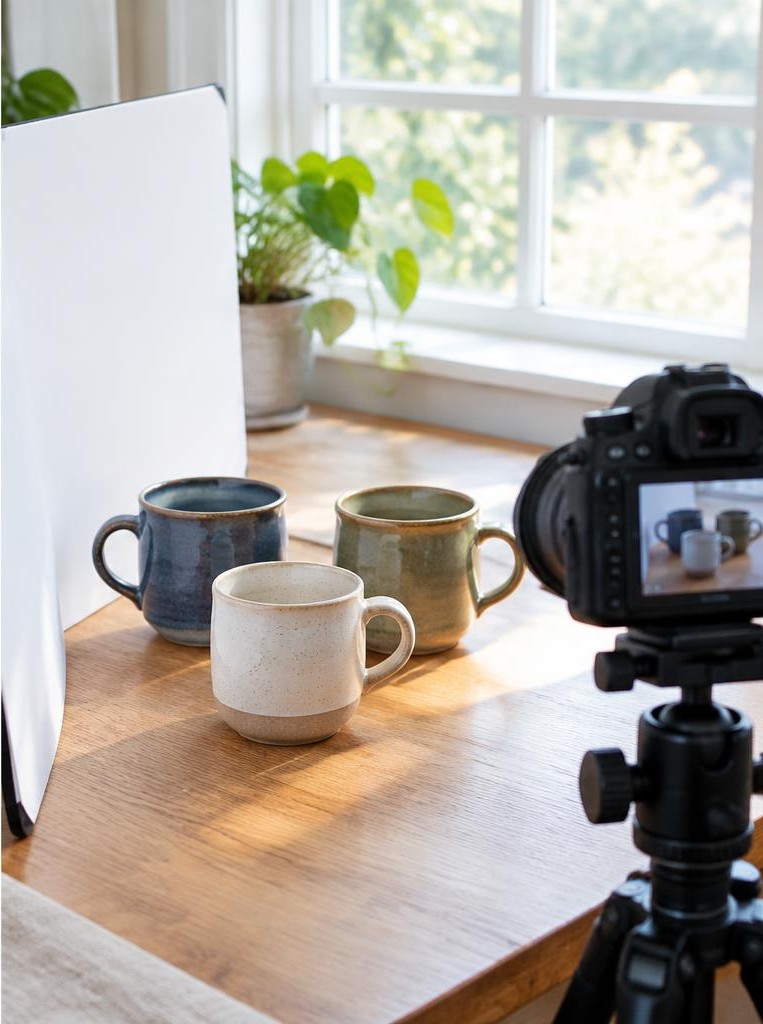
Create a compact portfolio that demonstrates the service you plan to offer. If you want to photograph food, show several foods, surfaces and lighting situations.
If portraits are your focus, show varied people and settings. Use only images you created and have permission to display.
Clearly label test, personal and collaborative work so visitors are not led to believe it was commissioned by a client.
Quality and relevance matter more than volume. Review each image for focus, exposure, colour, distracting backgrounds and consistent editing.
Ask a few people who resemble your intended customers whether the portfolio makes your offer understandable. Their reactions are useful feedback, not a prediction of sales.
05Choose an entry-level offer you can deliver
Keep the first service narrow enough to plan: a limited session length, defined location or subject, a stated number of edited files and a realistic delivery window. Make clear what is excluded.
Avoid unlimited revisions, vague promises such as “all the best photos,” or a complex package that you have not tested.
Before accepting money, estimate the entire workload: preparation, travel, shooting, selection, editing, communication, delivery and record keeping. Calculate a sustainable price for your market and costs rather than copying a competitor’s fee.
No universal rate applies across countries, genres or experience levels. If unsure, seek local business mentoring and review what clients actually receive.
06Set expectations in writing
Use a written agreement that matches your work and jurisdiction. Clarify dates, locations, deliverables, payment, cancellation, rescheduling, image use, delivery timing and how a problem will be handled.
Explain what happens if weather, illness, equipment failure or access restrictions disrupts the plan. For contract language or legal obligations, get advice from a qualified professional where appropriate.
Make a checklist for each job: charged batteries, formatted cards, tested equipment, contact details, schedule, backup plan and agreed shot priorities. After the session, back up files promptly and do not erase originals until the delivered work and backup process are confirmed.
Reliability is part of the product, not an administrative extra.
07Learn the business basics before launch
Research demand, compare existing services and estimate startup and recurring costs. Check registration, tax, permits, insurance, consumer rules and home-business restrictions where you live.
These requirements vary with location and activity. The U.S.
Small Business Administration presents market research, startup costs and registration as part of planning and launch; use your own government sources outside the United States.
Keep separate records for revenue and expenses and learn what tax deadlines apply locally. Do not assume informal hobby arrangements, cash payments or online bookings are exempt from rules.
A local accountant, business adviser or small-business support service can clarify details.
08Find initial clients through trust, not inflated claims
Tell relevant contacts what you offer and show a small set of representative work. Approach community organisations or small businesses with a specific, respectful idea rather than mass messaging.
Ask permission before sharing a client’s name, images or review. Marketing claims should be accurate; the U.S.
Federal Trade Commission says advertising claims should be truthful, non-deceptive and evidence-based. Its guidance applies to U.S. advertising, while other jurisdictions have their own consumer-protection rules.
Avoid guarantees about sales, follower growth or search ranking. Do not invent client quotes or imply credentials you do not hold.
A transparent description such as “building a portfolio in tabletop product photography” is more credible than a claim of extensive commercial expertise you cannot support.
Worked example
09Hypothetical example: first product assignment
Imagine Lee has photographed household objects for practice and wants to work with local craft makers. Lee first produces a labelled sample series, learns to control reflections and asks two makers what image formats their online shops need.
One agrees to a small, clearly scoped paid test. Lee confirms the brief and usage in writing, completes a timed practice run and prepares duplicate equipment for the shoot.
The assignment takes longer than expected because each reflective item needs careful adjustment. Lee records the actual time and revises the next offer rather than pretending the workflow was effortless.
This fictional story shows how a small, transparent project can reveal a skill gap and improve planning; it does not guarantee a first booking or a particular income.
Troubleshooting
10Common early mistakes and how to avoid them
Buying expensive equipment before practising is a common trap. Borrow or rent where practical, then buy only what solves a demonstrated limitation.
Another mistake is taking every kind of job to gain experience. A poor fit can harm a client’s important event and your confidence; decline work beyond your current ability or collaborate with an experienced professional under clear terms.
Do not deliver every frame, neglect backups, skip written scope or publish images without permission. Do not confuse social-media praise with repeatable demand.
Review your own work critically, ask for targeted feedback and make changes based on evidence. If a task concerns safety, sensitive subjects or valuable property, understand the relevant risks before agreeing.
FAQ
11FAQ and a readiness checklist
Do I need formal photography school? Not necessarily; structured learning and deliberate practice can help, but client work still requires demonstrable ability. Can I charge while learning? You may offer a clearly scoped service when you can deliver it responsibly, subject to local rules and honest disclosure. Should I start with weddings? Only if you can reliably manage the high stakes, logistics and backups; learning on an irreplaceable event is risky.
Before launch, confirm that you can produce consistent sample work, explain your offer, estimate the full workflow, use a written agreement, protect files and meet local obligations. If one of these is missing, make it the next learning goal. You do not need to know everything, but you must know the limits of what you are selling.
Sources & further reading
These references support the technical explanations. Exercises and starting settings are illustrative and should be adapted to your equipment and conditions.
- U.S. Small Business Administration: 10 steps to start your business
- U.S. Small Business Administration: Apply for licenses and permits
- Federal Trade Commission: Advertising and Marketing
- U.S. Copyright Office: What Photographers Should Know about Copyright
Free resources from LensSuite
Was this guide helpful?