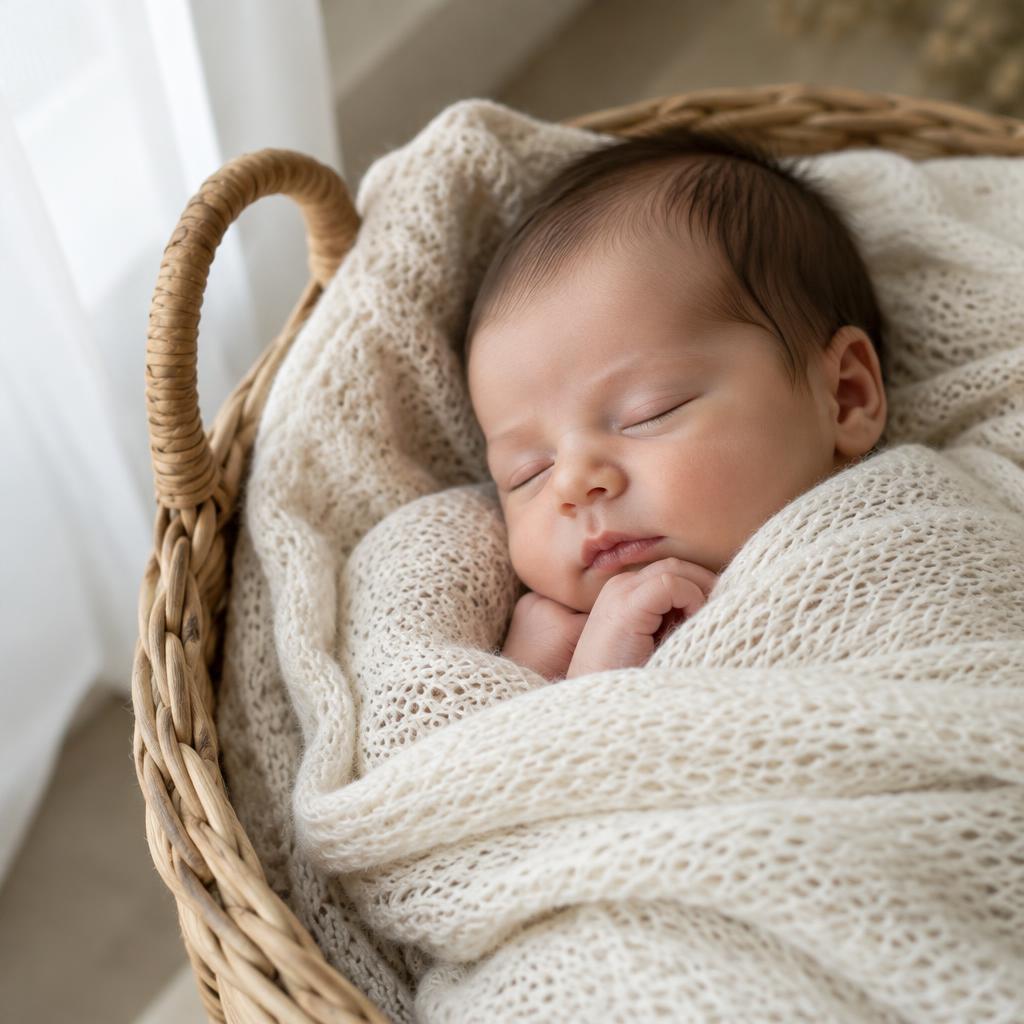
For sleepy, gently curled studio portraits, aim for roughly 5–14 days after birth, provided the baby and recovering parent are well. Book during pregnancy, then confirm the appointment after birth; lifestyle photographs and older-baby portraits remain worthwhile beyond that window. The preferred age is a photographic convention, not a medical deadline.
01Why studios recommend days 5–14
Studios commonly favour this window because young newborns tend to sleep frequently and retain a naturally curled posture. Manchester photographer Monika Szmidt recommends 5–14 days, while Berlin photographer Svetlana Popova gives the same preferred range.
Individual babies vary. [1](https://www.monikasportraitphotography.com/newborn-photography) [2](https://popova-newborn.de/en/faq)
Feeding and settling shape the appointment, but feeds are not reliably predictable. Plan around the baby’s cues rather than promising a long sleep after one feed.
Never restrict feeding or keep a baby awake to manufacture a pose.
Troubleshooting
02Book during pregnancy, not against a fixed birthday
Start enquiries in the second trimester—approximately weeks 14–27—if you want a particular photographer. Treat this as practical availability planning, not a universal studio rule.
Ask whether the booking reserves capacity around your due date rather than one inflexible appointment.
Studios differ in lead times and rescheduling policies. Confirm the deposit, illness arrangements and what happens after early birth, hospital admission or delayed recovery.
The final date should respond to the actual birth and family circumstances, not pressure to meet a portfolio age.
03What changes after two weeks?
After two weeks, some babies become more alert, stretch out more readily or resist lengthy posing. That may change the achievable gallery, but there is no sudden day-15 transformation.
Feeding, temperament, gestational age and health all matter.
At three weeks, allow for awake portraits and gentle wrapping. At one month, concentrate on expressions, hands and family cuddles.
Popova explicitly allows discussion of sessions up to one month; other studios publish options up to six weeks. [3](https://www.linphotography.com.au/pre-booking-info/)
04Three months is a different, valuable milestone
If the first month is already behind you, consider a three-month baby session rather than trying to reproduce curled newborn poses. Plan for eye contact, emerging expressions and interaction with caregivers; developmental abilities vary, so do not promise smiles or independent head control.
Photograph supported positions that suit the individual child. Any tummy-time image should be brief, awake, directly supervised and appropriate to the baby’s abilities.
A milestone portrait is not a consolation prize: it records a different stage of family life.
05Allow time for feeding, changing and settling
Reserve around 2–3 hours for a full newborn appointment when that matches the studio’s package. Both F56 Studio and Popova publish this duration; a shorter lifestyle or mini session may work differently.
The appointment includes care breaks, not continuous posing. [4](https://f56studio.com/services/newborns)
Bring usual feeding supplies, spare nappies or diapers, a change of clothes and anything the photographer requests. Keep the rest of the day light.
Photographers should leave buffer time between clients rather than rushing an unsettled baby to protect a packed schedule.
06Warmth and safety matter more than any pose
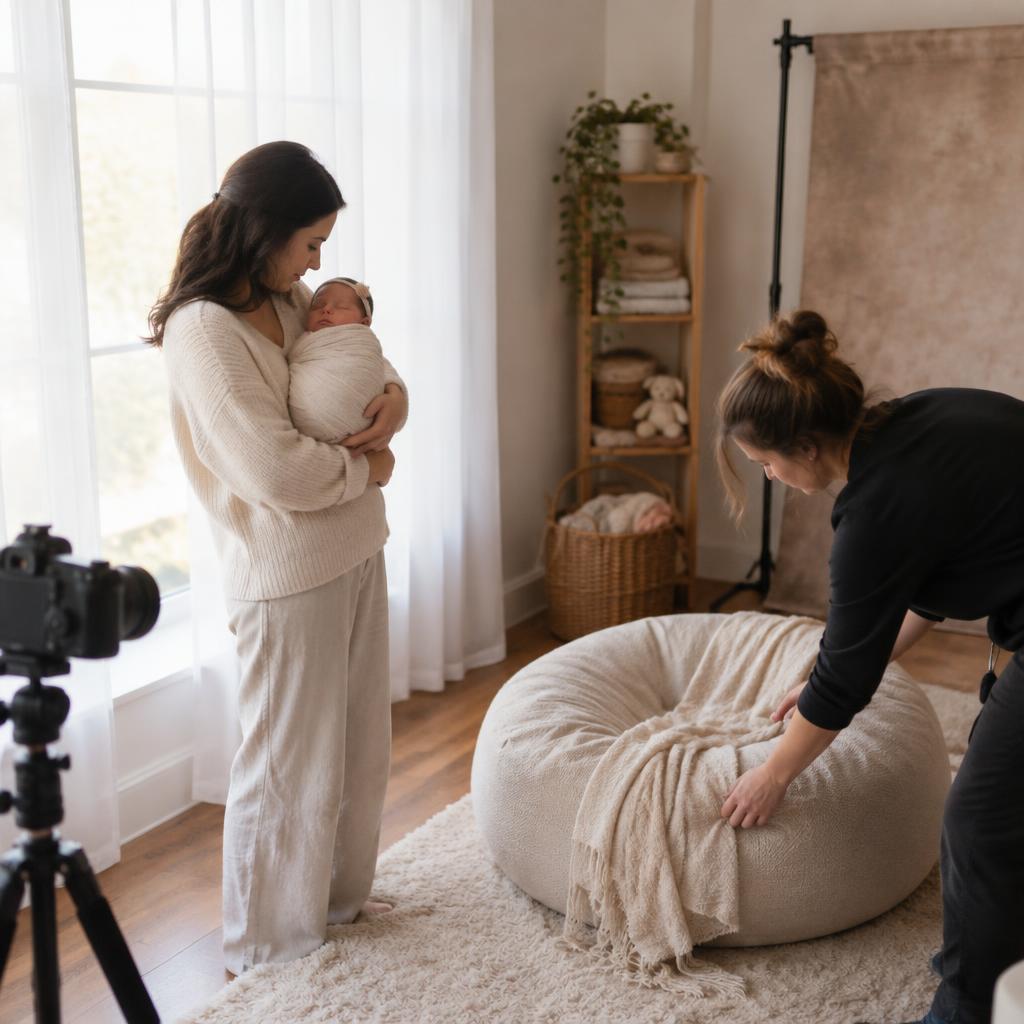
Ask about newborn-specific training, hands-on support, hygiene, illness policies and the role of an assistant. APNPI’s parent guidance recommends asking directly about training and how babies remain supported. [5](https://apnpi.com/for-parents/)
Keep the space comfortable without overheating; clothing, wraps and room conditions all affect warmth. Avoid direct heaters and hot props.
Never leave a baby unattended on a raised surface or force limbs into position. Unsupported-looking images may use composites: the baby must remain supported during capture, not balance for the camera.
07Worked schedule: a 20 November due date
Suppose your due date is 20 November 2026. You enquire around August and reserve flexible November capacity.
If the baby arrives on 18 November, the 5–14-day planning window falls around 23 November–2 December; a provisional 27 November appointment would be nine days after birth.
Contact the photographer after delivery according to their policy. If discharge, feeding support or recovery changes the plan, move the session.
These dates demonstrate scheduling arithmetic, not clinical advice or a reason to hurry home from hospital.
08Illustrative story: the family booking late
Imagine a family enquires when their baby is 24 days old. They worry that every worthwhile photograph has already been missed.
A photographer explains that deep-sleep posing may be less predictable, then offers a relaxed session with parents holding the baby.
The resulting plan includes awake expressions, tiny fingers and feeding breaks rather than a rigid prop list. This is an illustrative scenario, not a reported client experience.
The useful decision is adapting the brief instead of labelling the booking “too late.”
09Posed studio or lifestyle at home?
Choose a posed studio session if you want controlled backdrops, coordinated wraps and a specialist’s carefully supported setups. Ask to see complete galleries from babies of a similar age, not only social-media highlights.
Choose lifestyle at home if comfort, family interaction and less travel matter more than stylised poses. Clear one window-lit area; a perfect house is unnecessary.
Neither format is automatically safer: handling, support and baby-led pacing matter in both. Confirm what the fee includes, particularly image numbers and whether parents or siblings can join.
Troubleshooting
10Troubleshooting unsettled babies and jaundice
If the baby is persistently crying or uncomfortable, stop for feeding and comfort. Reduce the planned setups or reschedule.
A photographer should not diagnose “colic” or ask parents to ignore unusual symptoms for the appointment.
Suspected jaundice needs medical advice, not a lighting fix. NHS guidance advises urgent assessment for suspected jaundice and emergency care when a jaundiced baby is unusually sleepy, difficult to wake or not feeding.
Use your local urgent or emergency service. Follow clinical advice on timing; never postpone treatment for portraits. [6](https://www.nhs.uk/conditions/jaundice-in-babies/)
FAQ
11Frequently asked questions
Is three weeks too late? No. Discuss realistic expectations and include awake or parent-held images.
Should a premature baby follow the same calendar? Not automatically. Plan around medical advice, discharge and individual needs rather than applying the standard age window rigidly.
Must the baby sleep? No. Calm awake portraits count.
Can jaundice be edited out? Cosmetic colour work does not assess or treat jaundice. Health concerns belong with a clinician, and the appointment can wait.
12Your booking checklist
Choose your preferred style, shortlist newborn specialists and ask about safety training. Reserve flexible capacity during pregnancy, confirm rescheduling terms and update the photographer after birth.
Share relevant handling needs without treating the photographer as a medical adviser.
On the day, feed responsively, allow breaks and keep expectations flexible. Save a simple shot list: baby alone, baby with each caregiver and one family photograph.
If only a few comfortable setups happen, that can still produce a meaningful record. The best timing is when photography fits the baby—not the reverse.
Sources & further reading
These references support the technical explanations. Exercises and starting settings are illustrative and should be adapted to your equipment and conditions.
- Monika Szmidt: Newborn photography timing
- Svetlana Popova: Newborn session FAQ
- Lin Photography: Pre-booking information
- F56 Studio: Newborn sessions
- APNPI: Questions for parents
- NHS: Jaundice in babies
Free resources from LensSuite
Was this guide helpful?