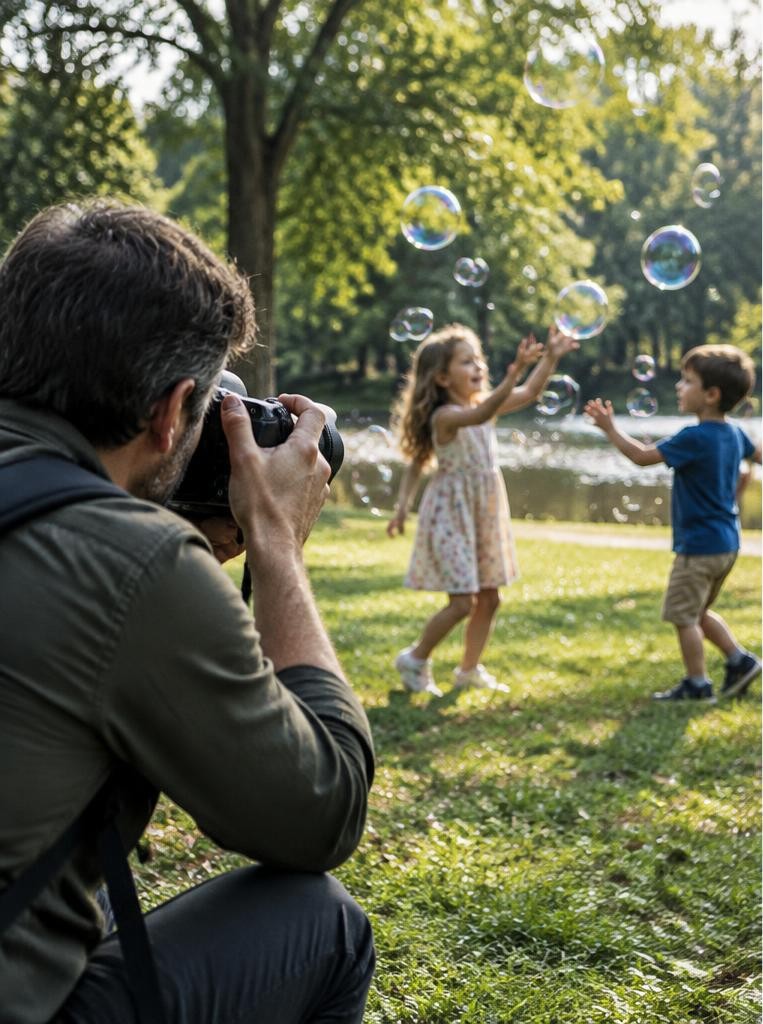
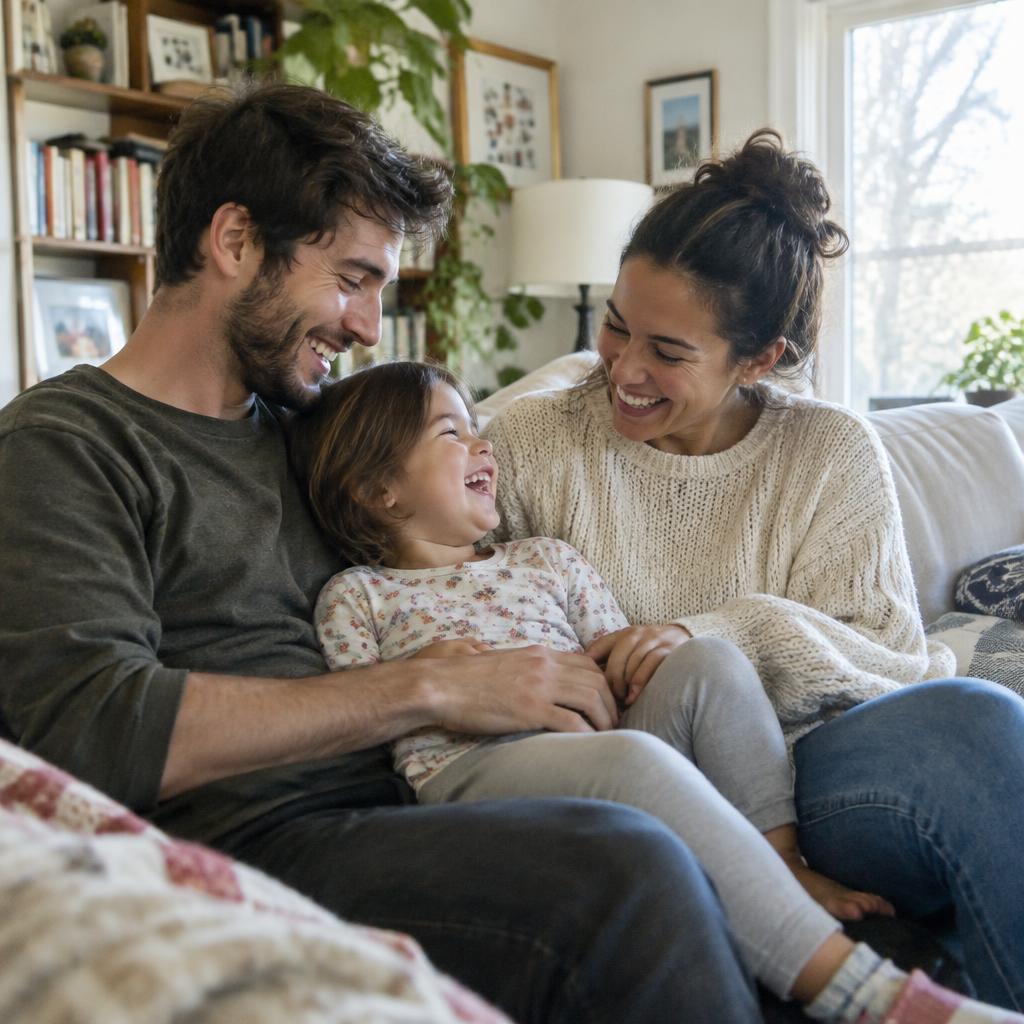
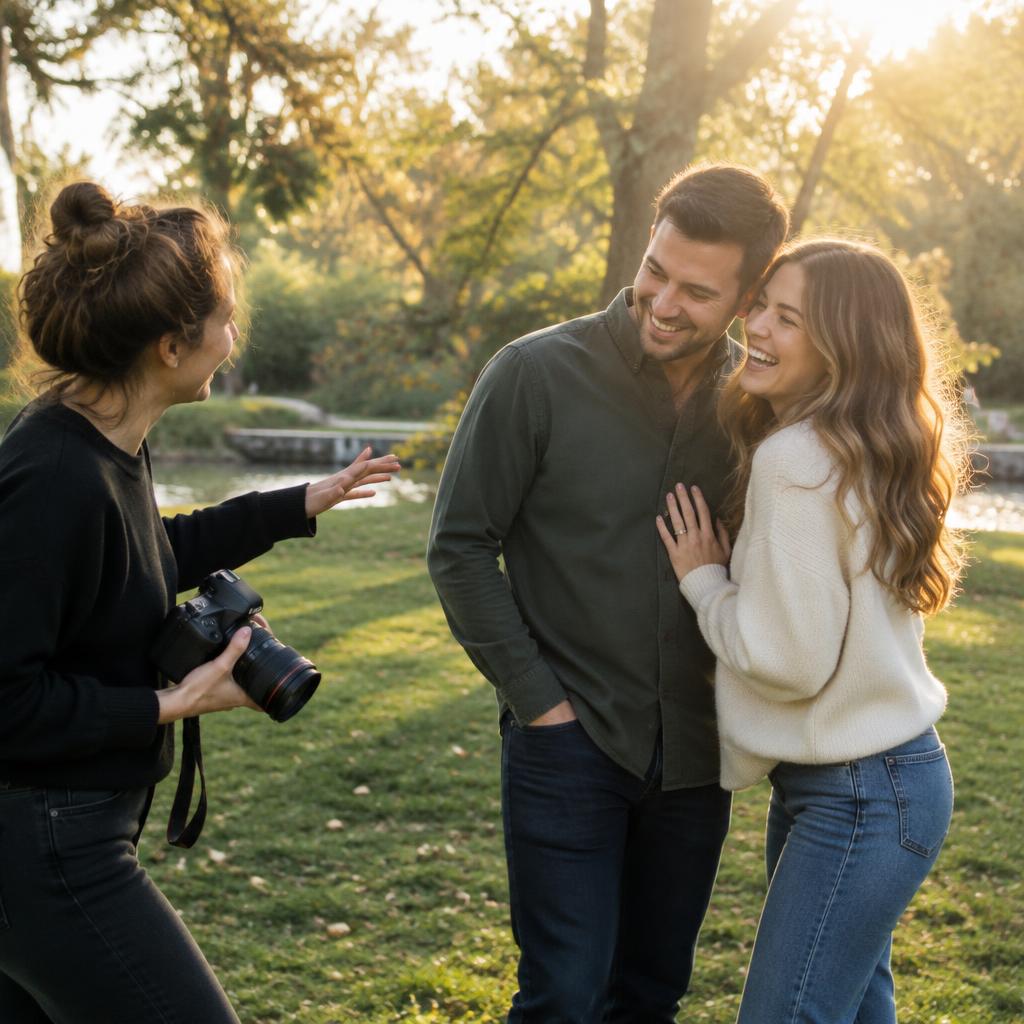
Lifestyle photography is directed, candid-looking photography of people doing everyday activities in believable settings. The photographer may choose the light, location and activity, then capture genuine reactions within that setup; unlike pure documentary photography, the situation can be deliberately arranged.
01Real life, with a little direction
Think of a couple making coffee, siblings sharing a book or parents comforting a newborn. The interaction matters more than everyone looking perfectly at the camera.
A home can contribute meaningful details without looking like a furniture catalogue.
Adobe describes lifestyle photography as creating the appearance of candid reality through planning. That does not make every interaction fake.
A photographer can suggest reading together while the resulting glance or laugh remains spontaneous. Be transparent about that direction rather than presenting a staged scene as untouched documentary evidence.
02Lifestyle versus posed portraits versus documentary
Traditional posed portraiture usually prioritises deliberate body position, expression and lighting. Lifestyle photography supplies a situation and then allows movement.
Strict documentary practice observes events without asking people to repeat actions or moving them into better light.
Kevin Mullins’s documentary guide explicitly distinguishes observation from prompting. These labels are not universally standardised, so discuss working methods rather than relying on a package name.
Ask: will the photographer direct activities, rearrange the room, request repetitions or simply observe? A mixed session can include both a formal group portrait and relaxed interactions.
Try this
03Typical sessions: families, couples and newborns
Families might build a puzzle, prepare a snack or walk somewhere familiar. Couples can cook or visit a favourite place.
Newborn lifestyle sessions often show feeding, cuddling and the family environment rather than elaborate supported poses.
Choose activities that participants already enjoy. Ask about accessibility, privacy, sensory needs and who is comfortable being photographed.
For newborns, keep the baby supported by a responsible adult and allow feeding and settling breaks. Do not improvise complex newborn poses or prioritise a photograph over safe handling.
04Direct with prompts, not endless corrections
Replace “act natural” with an action: “show your parent your favourite page” or “walk together and tell each other about breakfast.” Give one instruction, then allow time for something to happen. Avoid demanding affection or laughter.
Start with a comfortable position in useful light, rather than correcting every hand. If a prompt fails, change the activity instead of repeating it louder.
Offer choices—book or blocks, kitchen or sofa—so participants keep some control. A quiet, thoughtful photograph can be as worthwhile as an exuberant one.
05Find light before choosing the prettiest room
Look for a large window or open shade outdoors. At home, place the activity near the window without forcing anyone into direct sun.
Turn off nearby lamps if mixed colour temperatures create distracting patches on skin.
A small, bright corner can work better than a large, dark lounge. Keep everyday details that explain the family, while checking for private documents or visible addresses.
Use backgrounds deliberately; a lifestyle image should feel lived-in, not accidentally reveal information the family did not agree to share.
06Camera settings: useful starting points
For moving children, try 1/500s, f/4 and Auto ISO as an initial exercise, then inspect a test frame. For a quiet adult, 1/200s may be sufficient.
These are suggested starting settings, not guaranteed exposures. Adjust for movement, available light and the depth of the group.
Continuous autofocus can help with changing distance. Focus on faces and check that people in different rows remain acceptably sharp.
Use a moderate wide-angle view for context, but avoid placing faces very close to the lens near frame edges. A phone’s main camera is enough for practising prompts and timing.
Worked example
07What does lifestyle photography cost? Published examples
Published UK examples show a £130–£299 span across selected family packages, not a worldwide average. Beau-Louise lists £130 for 60 minutes and 10 digital images, and £180 for 90 minutes and 30 images.
Mel Hudson lists £299 for a two-hour family session, approximately 35 digital files and a choice of album or framed print.
Newborn examples differ too: Beau-Louise lists £250 for up to 90 minutes and 20 images; Mel Hudson lists £199 for two hours, 15 files, a framed image and soft-cover album. Prices can change.
Compare inclusions, travel, taxes and image allowances directly; do not convert these into a universal local-market rate.
Worked example
08Worked example: plan a 60-minute family session
Imagine two adults and two children at home. Beforehand, ask which room receives useful daylight, when the children usually have energy and which activity they enjoy.
Agree on permission for photographs and separately for any public sharing.
Allocate ten minutes to settling in, 15 to reading near a window, 15 to building blocks, ten to individual connections and ten to breaks or a group photograph. Treat this as a flexible plan.
Make a wide room view, a medium interaction and a close detail during each activity; variety comes from viewpoint, not constant instructions.
Try this
09Illustrative session story: the child who says no
In this invented example, a child refuses to sit on the sofa. Rather than insist, the photographer asks whether they would like to show a parent their toy animals.
The activity moves to a bright patch of floor, and the adults join without demanding a smile.
The useful photograph might be a serious face concentrating on a tiny horse, not a laughing family huddle. This scenario is illustrative, not a report of a tested technique.
Following a child’s interest can create an opportunity, but it cannot guarantee a particular expression.
10Decision: choose lifestyle or posed photography?
Choose lifestyle when interaction, surroundings and small gestures matter most. Choose a posed approach when you need a precise arrangement, consistent headshots or a formal portrait with everyone clearly visible.
Choose documentary when non-intervention is essential to the story.
For a family album, combine approaches: make one brief, agreed group portrait, then move into activities. Tell clients which images are priorities and which depend on unpredictable moments.
Never promise that every child will smile, every newborn will sleep or every home will resemble a studio.
Troubleshooting
11Troubleshooting: reluctant children and dark homes
If children disengage, pause, offer a familiar activity or stop. Avoid coercion and respect a clear refusal.
Nikon’s children’s portrait advice illustrates the value of adapting to individual temperament rather than imposing one expression.
In a dark home, move closer to a window, simplify the group arrangement and raise ISO before letting the shutter become too slow for movement. If faces fall on different focus planes, stop down and accept higher ISO.
When blur persists, distinguish missed focus from motion: a sharp sofa with a smeared child points toward subject movement.
FAQ
12FAQ: clothes, equipment and delivery
Do people need matching clothes? No. Comfortable clothing suits the activity; avoid making wardrobe rules more important than identity.
Is lifestyle always indoors? No. Gardens, streets and familiar outdoor places can provide context.
Do you need a fast prime lens? No. Begin with the equipment available and enough light.
How many photographs should clients receive? Agree this in the contract. The published packages above demonstrate that session length alone does not determine image count; editing, products and licensing also affect the offer.
Try this
13A beginner’s practice checklist
Arrange a 20-minute practice session with willing participants. Choose one familiar activity, one usable light source and three viewpoints: wide, medium and detail.
Confirm boundaries before starting, including whether any images may be shared.
Make a test exposure, give one prompt and watch for interaction. Pause if anyone becomes uncomfortable.
Afterwards, choose six photographs that show setting, action and connection rather than six nearly identical smiles. Ask participants which images feel like them, then use their feedback to plan a second, simpler session.
Sources & further reading
These references support the technical explanations. Exercises and starting settings are illustrative and should be adapted to your equipment and conditions.
- Adobe: Lifestyle Photography
- Adobe: Candid Photography
- Kevin Mullins: Documentary Family Photography
- Beau-Louise: Home Lifestyle Packages
- Mel Hudson: At-home Family Photography and Prices
- Nikon: Tips for Children’s Photographs
- Nikon: Photographing Baby’s First Smile
Free resources from LensSuite
Was this guide helpful?