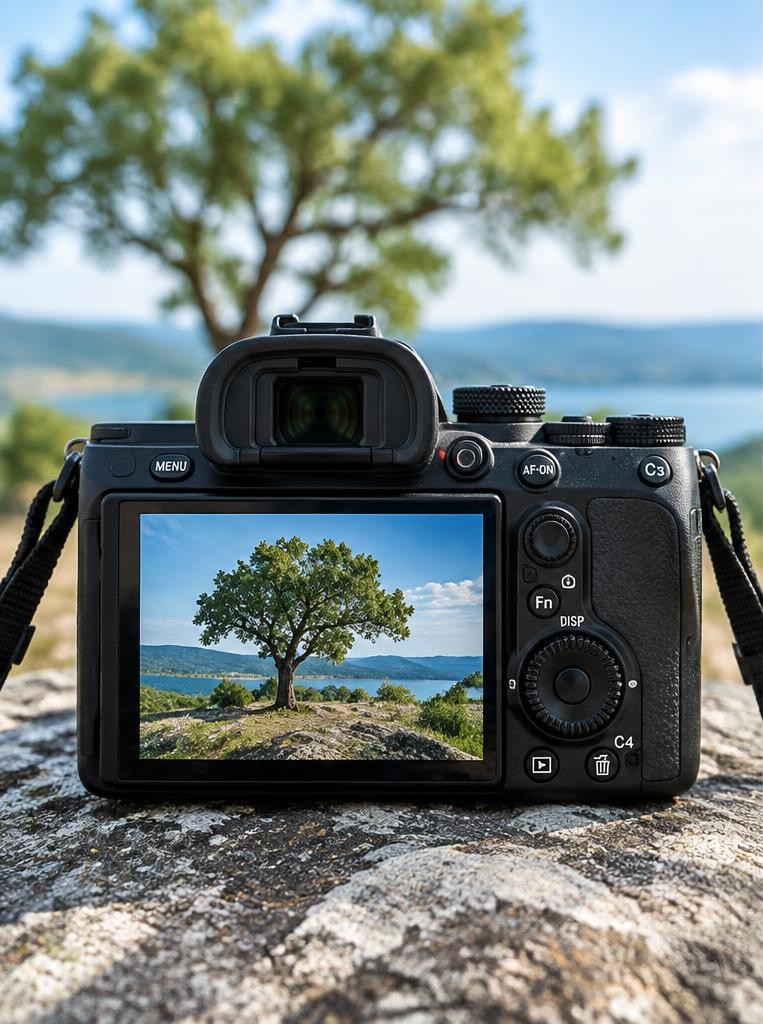
Newborn posing does not need to mean arranging a baby into a complicated shape. A safer beginner approach is to arrange the adults, camera, light, and background while the baby remains comfortably supported. You can create variety by changing your viewpoint, the caregiver's position, or the crop instead of repeatedly moving the baby. This guide stays with two simple foundations: a baby held by an awake, attentive caregiver, and a baby placed on their back in an appropriate empty bassinet. It does not teach unsupported balances, suspended setups, or advanced curled poses. A photograph is never important enough to override feeding, settling, comfort, medical advice, or a caregiver's wish to stop.
01Keep sleep safety separate from photographic style
For infant sleep, American Academy of Pediatrics guidance calls for placing the baby on their back on a firm, flat surface, with the sleep space free of pillows, props, blankets, toys, and other soft materials. Inclining the mattress or propping the baby is not a safe solution.
For photographs in a bassinet, use a compliant product intended for infant sleep, following its instructions and limits, with its appropriate fitted sheet only. Do not treat an attractive basket as equivalent.
Having someone nearby does not make an unsafe sleep arrangement safe. If the baby falls asleep while being held, follow pediatric safe-sleep guidance rather than extending the pose.
02Prepare a simple, uncluttered working area
Choose a space with comfortable room conditions and enough room for adults to move without stepping over equipment. Secure light stands and keep cords, camera straps, small accessories, and hot equipment away from the baby.
Wash hands and clean shared surfaces. If anyone involved is unwell, discuss postponement rather than trying to work through the appointment.
Set up the camera and background before bringing the baby into the scene. A plain wall or a caregiver's simple clothing is sufficient.
Do not add loose fabrics to the bassinet for styling, and do not place the bassinet on a table or other improvised platform. Follow the manufacturer's placement instructions and keep the surrounding floor clear.
03Agree on roles before making photographs
Tell the family that the session will follow the baby's needs and that care breaks are expected. Identify the awake, attentive adult responsible for holding or watching the baby at each moment.
The photographer should not assume that operating a camera also provides adequate hands-on support. If there is uncertainty about who is responsible, stop and clarify.
Ask about relevant comfort or handling restrictions without attempting to diagnose medical issues. Follow the family's clinician-directed instructions and postpone anything that cannot be done comfortably.
Explain that no one needs to hold a smile or maintain a pose through pain. Parents recovering from birth may need a supportive chair, shorter intervals, or a different composition altogether.
04Begin with a securely seated caregiver
A seated adult often provides a practical starting point because the composition can remain stable while the photographer moves. Choose a firm, stable chair that allows the caregiver to sit comfortably with feet supported.
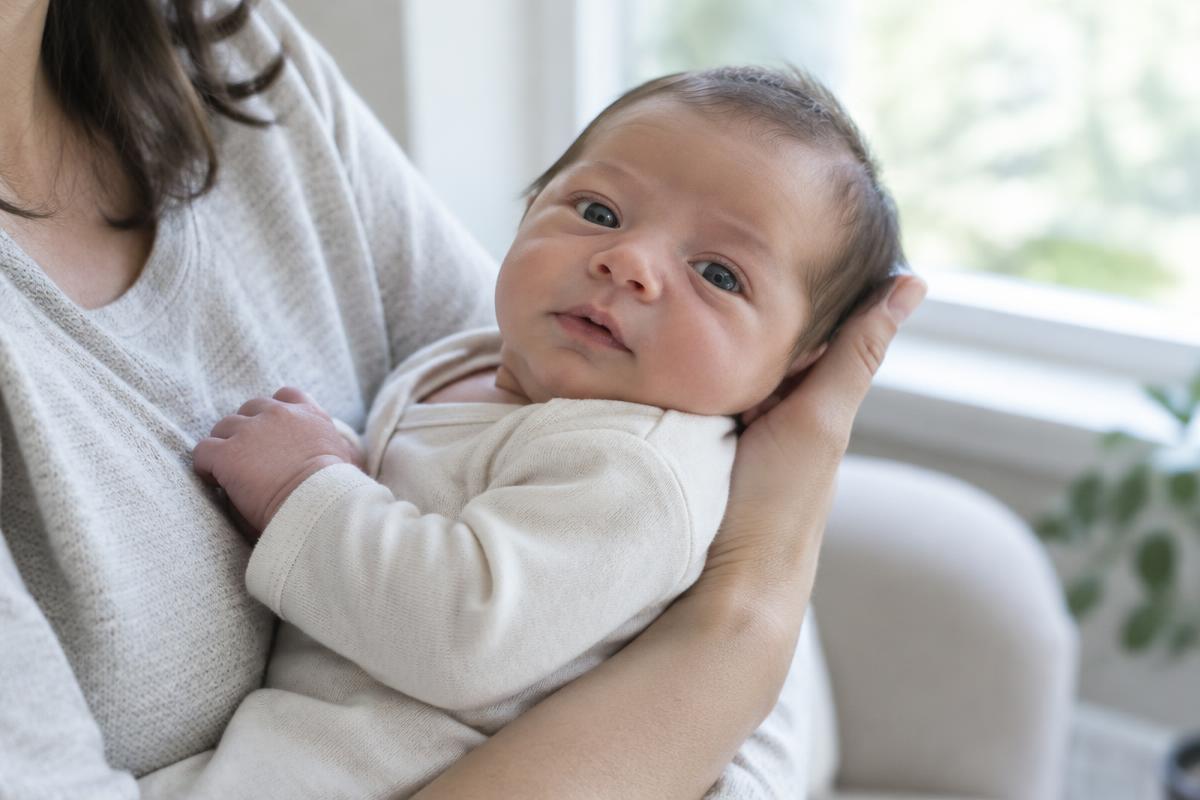
Ask the adult to hold the baby as they normally do, supporting the head and neck and keeping the face visible and unobstructed.
Do not push the baby's chin down, tuck limbs tightly, or move the head to create symmetry. Adjust the adult's shoulders or your camera angle instead.
Ask the caregiver to look at the baby, then briefly toward the camera if comfortable. The caregiver must remain awake and attentive throughout; fatigue is a reason to pause, not a challenge to overcome.
05Make several compositions from one comfortable hold
Once the baby is comfortably supported, work through wide, medium, and close views without changing the hold. A wide frame can show the family connection, a medium frame can emphasize the caregiver's hands and the baby's face, and a close detail can show an ear, fingers, or a resting hand.
Keep essential support in place even if it remains visible.
Move yourself before asking anyone else to move. A small change in height or lateral position can separate the face from a busy background.
Do not climb over the baby or balance on unstable furniture for an overhead view. If a crop is difficult to achieve safely, choose a different crop rather than improvising a risky camera position.
06Use the empty bassinet for a straightforward back-lying view
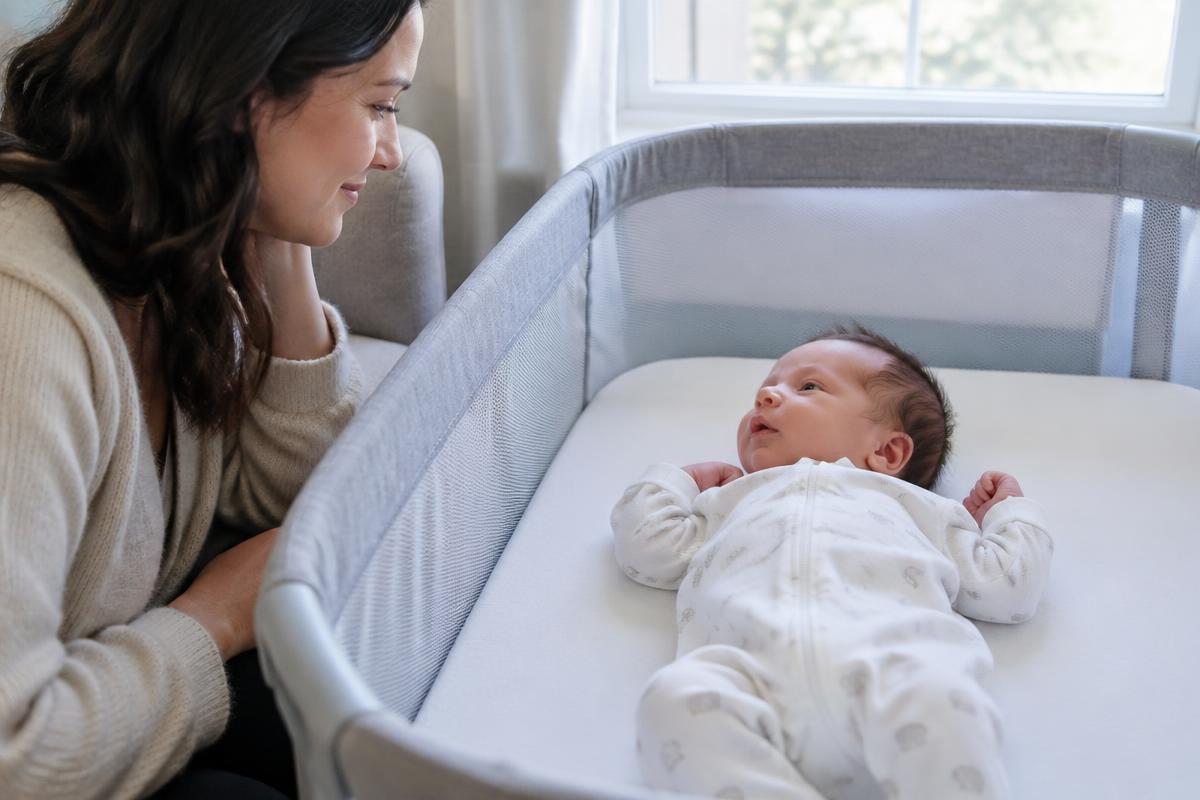
When using a suitable bassinet, have the caregiver place the baby on their back on the firm, flat sleep surface. Keep the space empty apart from the appropriate fitted sheet and the baby's normal, suitable clothing.
Do not add positioning cushions, rolled towels, stuffed toys, loose blankets, or decorative objects around the face or body.
Photograph from beside the bassinet or another stable position without leaning equipment over the baby. Secure the camera strap so it cannot dangle into the space.
Compose with the bassinet's natural lines and the baby's unforced posture. An awake, attentive caregiver remains close and responsible, but their presence does not justify adding unsafe items or changing the sleep position.
07Let the light do more of the visual work
Use soft window light where available, placing the caregiver or bassinet so the light comes gently from the side. Keep direct sun and glare away from the baby's face.
If the contrast is too strong, change your position or use an existing light-colored wall as a natural reflector rather than bringing loose material into the sleep space.
Do not overheat the room to encourage sleep or position heaters near the baby. Avoid forcing the family into an uncomfortable location merely because the background looks cleaner.
If you use photographic lighting, secure it properly and keep equipment beyond reach. A calm, evenly lit photograph is a better goal than a dramatic effect that complicates care or creates hazards.
Worked example
08A worked camera example without disturbing the baby
Imagine a hypothetical window-lit room where a test exposure is 1/125 second, f/4, and ISO 800. If small movements blur at that shutter speed, changing to 1/250 second halves the exposure time.
Raising ISO to 1600 restores roughly the same brightness while keeping f/4. These are illustrative settings, not a universal prescription.
Check focus on the visible eye or nearest important facial detail, then review a magnified image. If several faces sit at different distances, stop down and compensate with ISO or suitable lighting rather than asking the baby to change position.
Accept some image noise when the alternative is motion blur. Never prioritize a low ISO number over a comfortable, brief session.
09Include a second caregiver or sibling carefully
For two adults, keep one person clearly responsible for the baby's support while the other moves close. Ask for a gentle hand on the supporting adult's shoulder or forearm rather than crowding the baby's face.
Check that the baby's nose and mouth remain clear and that adult clothing or hair has not fallen across them.
For siblings, use a composition in which an adult continues to hold the baby. A young child can sit beside the caregiver, look toward the baby, or offer a supervised touch if appropriate.
Do not ask a child to carry, balance, or independently support a newborn for a photograph. Have another adult available to guide the sibling away when their attention changes.
10Follow care cues rather than a pose list
Stop photographing when the baby needs feeding, changing, comforting, or a break. Let the caregiver interpret their baby's cues; do not insist that fussing will pass if everyone maintains the setup.
Avoid scheduling care around a shot list or withholding a feed to encourage a particular expression. A settled baby is not a performance requirement.
If the baby's color, breathing, responsiveness, or condition causes concern, stop and seek appropriate medical help rather than trying another position. For urgent breathing difficulty or unresponsiveness, contact emergency services immediately.
Photographers should know their limits and never diagnose a problem through the camera. A session can end early and still be a successful, responsible experience.
Try this
11A hypothetical baby-led mini session
Imagine a fictional family arriving with a baby who is awake and content in a caregiver's arms. The photographer begins with three compositions from the same supported hold: a family frame, a closer face-and-hands image, and a detail.
After several minutes, the caregiver notices feeding cues, so photography stops without attempting to finish a planned sequence.
Later, the caregiver places the baby on their back in the appropriate empty bassinet. The photographer makes a simple side view and a wider environmental frame from stable positions.
When the caregiver becomes tired, the session ends. This scenario illustrates a flexible workflow, not a promised duration or image count.
Care determines the pace, and the photographs adapt.
Troubleshooting
12Troubleshoot the photograph, not the baby
If hands obscure the face, change your viewpoint or ask whether the caregiver can comfortably adjust their own supporting hand without reducing support. If the baby turns away, photograph the relationship or a detail rather than repeatedly repositioning the head.
If the background is distracting, move the camera or choose a tighter frame.
If everyone looks tense, stop giving instructions and allow a quiet moment. If the baby remains unsettled, pause or reschedule.
If you cannot obtain the intended image without extra props or unsupported positioning, abandon that image. Editing can address a minor distraction in the background, but it cannot justify removing essential support during capture.
A simpler photograph is often the more honest and useful result.
FAQ
13Frequently asked questions
Can I place a sleeping baby on their tummy for a quick photograph? This beginner guide does not use that setup; maintain the pediatric back-sleeping boundary. Is a soft nest acceptable if someone watches continuously? No. Supervision does not turn a soft or otherwise unsafe sleep surface into a safe one.
Should I try chin-on-hands or suspended poses after watching a tutorial? No; those advanced arrangements are outside this guide and should not be attempted from online instructions. Must the baby be asleep? No. Awake, comfortable expressions can make excellent photographs. Can I hide the caregiver's supporting hands? Compose around them or include them; never remove support for the sake of a cleaner-looking frame.
14Finish with a safety and image check
Before each setup, confirm the support, the baby's clear face, the caregiver's alertness, the stability of the surroundings, and the absence of loose objects in the bassinet. Before each additional frame, ask whether the baby and adult remain comfortable.
A checklist is not a substitute for judgment, but it helps prevent attention from drifting entirely toward the camera.
Use the newborn timing guide to plan a flexible appointment and the portrait posing resource for adult arrangement ideas that do not require manipulating the baby. Keep current pediatric guidance central whenever sleep is involved.
Meaningful newborn photographs come from attentive observation, supportive adults, and thoughtful composition—not from testing how much positioning a newborn will tolerate.
Sources & further reading
These references support the technical explanations. Exercises and starting settings are illustrative and should be adapted to your equipment and conditions.
- HealthyChildren.org: My baby has a stuffy nose. How can I help them sleep safely?
- American Academy of Pediatrics: SIDS and safe sleep questions
Free resources from LensSuite
Was this guide helpful?