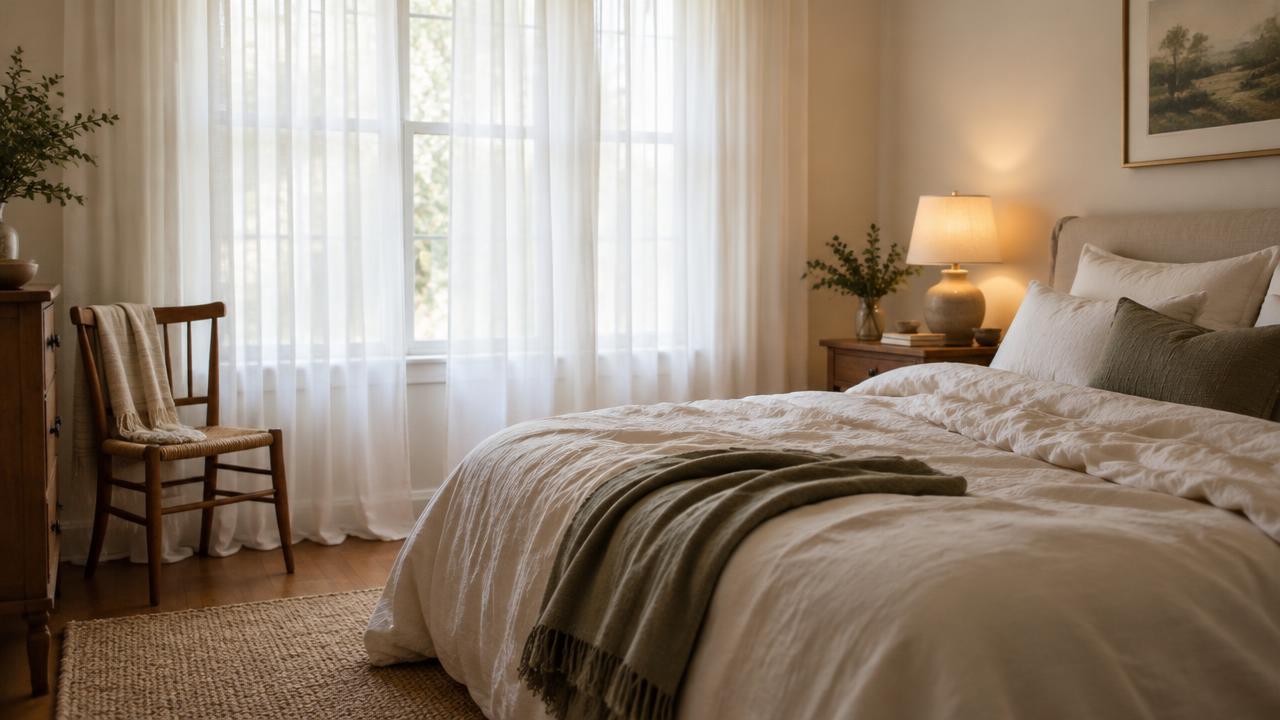
Boudoir photography is intimate portraiture made in a bedroom-like or private studio setting. It is usually sensual or romantic in mood, but it does not have to be nude or explicit — the client decides the level of coverage, the poses and who the images are for. The name comes from the French boudoir, a private room, and the practice is built around a private, controlled environment rather than a particular wardrobe. What makes it a distinct category is not how much skin shows. It is the combination of a private setting, a client-led brief, and a session process designed around someone who is nervous and exposed. That process — the conversation, the consent, the direction — is the craft, and it is what this guide covers alongside the lighting.
01How it differs from glamour, pin-up, lingerie and fine-art
These categories overlap so heavily that one tutorial calls boudoir less explicit than glamour while a scholarly study of the genre notes the two labels have been used interchangeably. Treat the distinctions as useful tendencies rather than rules: glamour tends toward a polished, beauty- and fashion-led presentation; pin-up leans on a stylised, playful, retro-inspired look that has influenced boudoir without being the same thing; lingerie photography describes wardrobe or subject matter and can be commercial product work as easily as portraiture.
Fine-art portraiture is a different axis entirely — it describes an artistic approach, not a level of undress. A boudoir frame can absolutely be fine art.
The practical takeaway is to judge a photographer by their complete galleries and their process, not by which label sits in their headline.
02Where the word comes from
Boudoir traces to the French bouder, roughly “to pout” or sulk, and by the eighteenth century described a private room for dressing, resting or retreat — a history of the room rather than of the photography. A Routledge chapter on the subject documents that usage.
The photographic genre is more recent and harder to pin to a date. What can be verified is that by the 1980s, boudoir was established enough to be taught: a study of US and UK “how-to” guides from that decade examines it as a distinct professional practice.
Anyone claiming a single invention date for boudoir photography is going beyond what the sources support.
Try this
03What a session actually involves
There is no industry standard package, so compare named offers instead of averages. One studio describes four hours of access with a 90-minute shoot and up to three looks.
Another lists a one-hour session with two or three outfit changes and eight retouched images, and a longer package of two hours with three to five changes and twenty-five images, delivered within two weeks. Those are individual offerings, not typical figures.
Before you pay, get five things in writing: how much of the booked time is shooting versus hair, makeup and consultation; how many outfit changes are included; how many finished images you receive and how they are selected; when previews and finals arrive; and which costs sit outside the session fee.
04Consent, privacy and the release form
The most important rule in this genre: permission to be photographed is not permission to publish. The Professional Photographers of America's copyright guidance is explicit that a subject's privacy and publicity rights sit alongside the photographer's copyright, and that a model release is what allows promotional use.
Ask whether portfolio or social-media use is optional, and whether declining changes anything about your session.
Ask who will be in the room. Some photographers allow a friend, partner or chaperone; others do not.
A “closed set” phrase should mean the photographer can tell you exactly who is present and how interruptions are prevented — do not assume the wording alone guarantees a setup. PPA's own account of a boudoir shoot describes a photographer pausing when a client became distressed and only continuing when she was ready, which is the standard to expect: you can ask for a pause, change a pose, keep a garment on, or stop entirely.
05What it costs
Prices vary widely by market and by what is bundled. One San Diego studio publishes collections from $1,400 for a one-hour session with eight retouched images to $3,900 for a full day with forty images and products, and states that the wider local range runs from $800 to $8,000.
Those are that studio's figures and its own market estimate, not a national average.
Compare inclusions rather than headline numbers. A $1,200 price that covers hair and makeup, a professional setup and a print credit can be better value than a $700 session fee where every extra image and every album is billed separately.
Try this
06An illustrative first session
This scenario is written to show how a first booking usually unfolds; it is not a report of a real client. Priya books a two-hour morning session at a studio she chose from a full gallery rather than a highlight reel.
Before paying she asks three questions: can her sister wait in the outer room, can she keep a robe on between looks, and can she decline portfolio use without losing anything. All three answers go into the email confirmation.
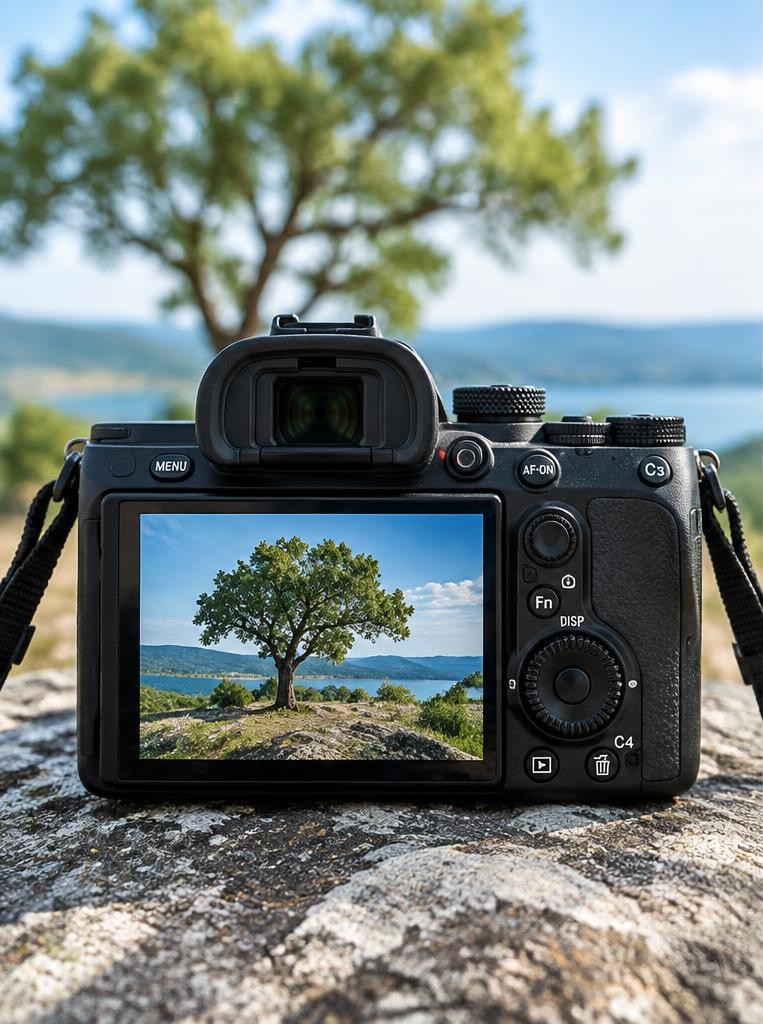
The session itself is slower than she expected. The first thirty minutes are hair, makeup and warm-up at the window; the photographer shows her the screen after the first few frames so she can see what is working.
Two outfit changes follow, one pose list is crossed off because it makes her uncomfortable, and she leaves having never removed the robe in front of anyone but the assistant who was announced each time. She picks eight images a week later, and only two of them go anywhere public — her choice, in writing.
07Lighting, and preparing a room
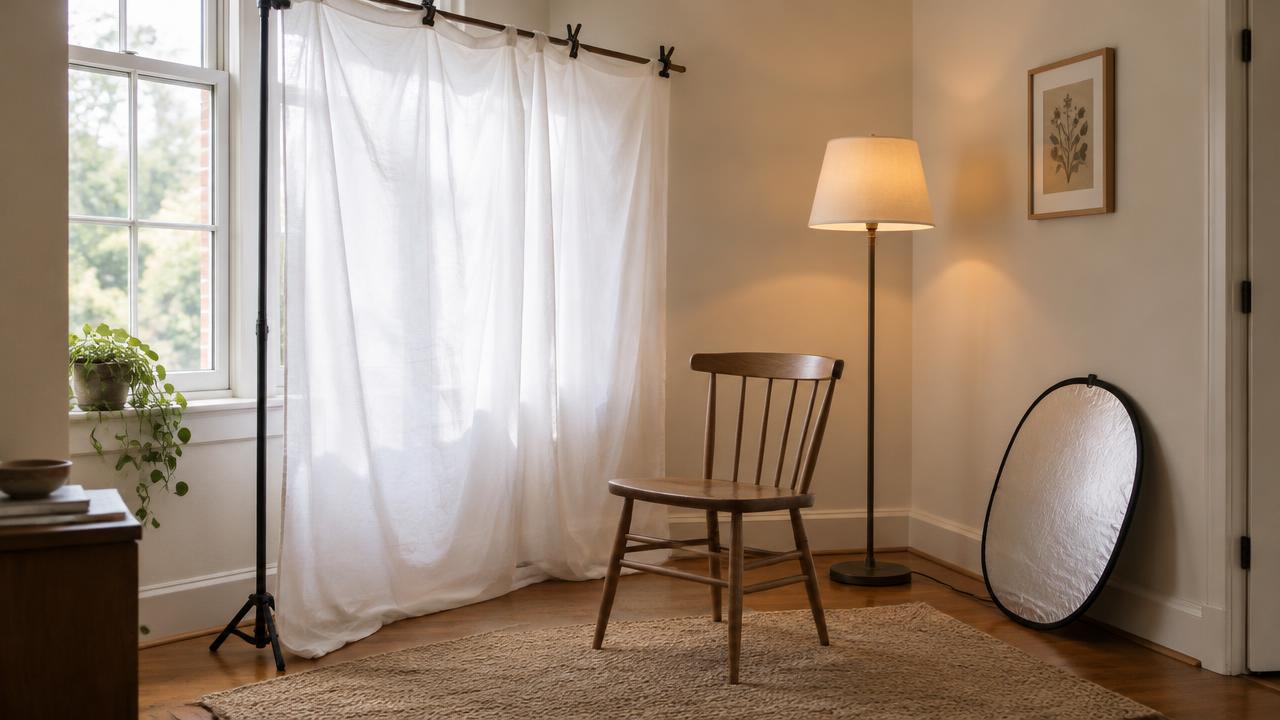
Boudoir is commonly lit with window light, reflectors or continuous sources, and the published guides cover both natural light and flash. A practical home-lighting walkthrough recommends starting at the largest window and moving around it, because distance and angle change the mood far more than any camera setting.
A reflector lifts detail out of shadows, and continuous lights let you see the result while you work instead of guessing.
For a room, start with the biggest usable window and check what someone outside can see. A sheer curtain softens light but does not guarantee privacy, so agree on blinds or coverings as well.
Clear one small area for posing, keep a private place to change, and leave a robe within reach of the set.
Worked example
08A worked example: a home session on a small budget
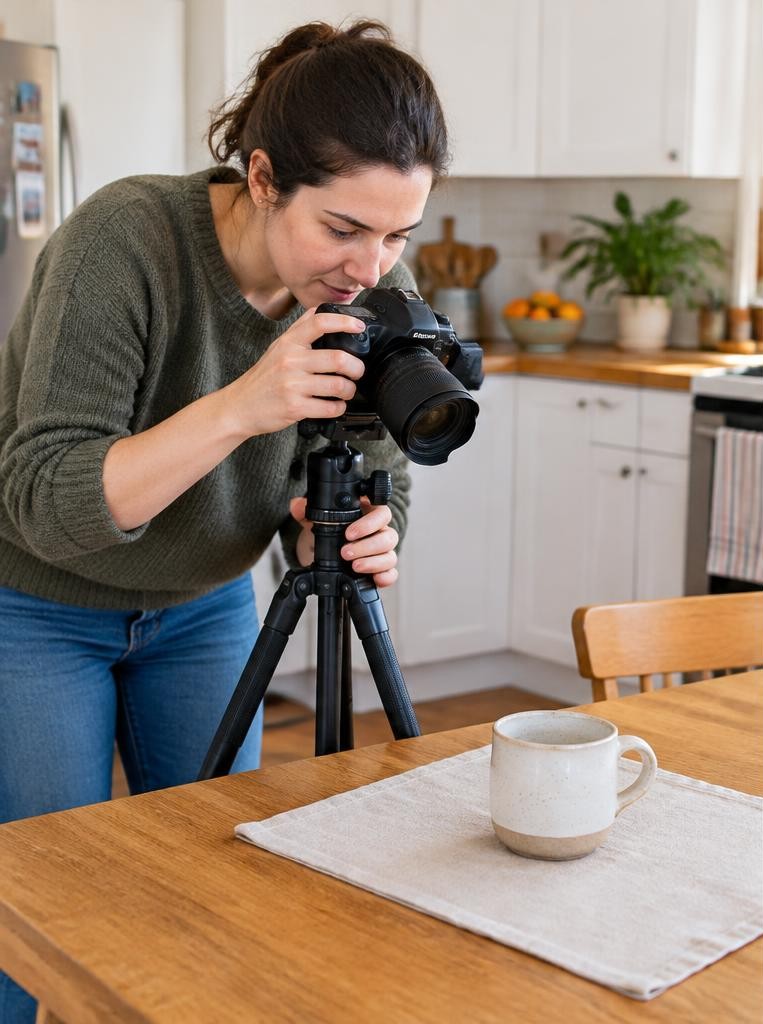
Suppose you want to photograph a partner at home rather than book a studio. You need one window, one chair or bed, a plain sheet or curtain as a diffuser, a large white board or foil reflector, and somewhere private to change.
That is often under $80 of gear you already half own, against a published studio session fee of several hundred dollars.
Run it like a professional: agree the coverage level and the pose list in advance, shoot with the door closed and one person present, review frames together on the camera screen as you go, and delete anything either of you no longer wants before editing. The budget version still needs the consent process — that part is not optional just because the lights are free.
09When the room isn't working
Harsh patches of sun on the subject mean the window is too direct: pull the sheer across it or move the chair back from the beam. Flat, dull faces usually mean the light is coming from behind the camera — move the subject so light crosses them at an angle.
Noisy, muddy shadows mean you are pushing ISO too hard in a room that simply lacks light; add a lamp, a reflector, or slow the shutter and use a tripod rather than cranking sensitivity. And if the background is a mess of household objects, do not fix it in editing: change the angle, or move one metre left.
A tidy frame is a positioning decision, not a software one.
FAQ
10Common questions about boudoir photography
Is it only for women? No rule says so. Many studios market to women, but the practice is not restricted by gender — check whether a photographer's portfolio and approach fit you.
Do I have to be nude? No. Beginner tutorials describe boudoir as often implying nudity rather than showing it, and the coverage level is yours to set in advance.
What if I'm self-conscious? You are not expected to arrive confident or know how to pose. Ask before booking how the photographer directs posing, handles breaks and responds when a client wants to stop.
How long until I get my images? It depends on the package. One studio promises delivery within two weeks; get your own photographer's timeline in writing.
11Before you book: a checklist
Look at complete galleries, not the most dramatic nine images. Talk through coverage, poses and image use before paying.
Confirm price, inclusions, cancellation terms and delivery date in writing. Ask who will be present and whether a support person may attend.
Bring outfits you already feel comfortable in, and ask what the studio provides.
Finally, agree the retouching style up front. Editing should serve what you asked for, not quietly reshape your body into something else.
Sources & further reading
These references support the technical explanations. Exercises and starting settings are illustrative and should be adapted to your equipment and conditions.
- iPhotography: Boudoir photography tutorial
- Professional Photographers of America: Copyright FAQs
- Professional Photographers of America: Sample contracts and releases
- PPA Magazine: Boudoir photography — making clients feel beautiful
- Amateur Photographer: Essential guide to lighting for boudoir photography
- Laid Bare Productions: A beginner's guide to boudoir lighting at home
- Monique Hoppe: Boudoir pricing and what collections include
- Boudoir By Louise: What a session includes
- Routledge: Commerce in the Boudoir (chapter on the private interior)
- Megan B. Ratliff: Reconstructing Visual Economies — boudoir how-to guides in the 1980s US and UK
Free resources from LensSuite
Was this guide helpful?