Wear clothing that fits comfortably, feels like you, and matches the mood you want. Boudoir-inspired photography can be intimate in atmosphere while remaining fully clothed: a soft shirt with trousers, a knit dress, a coordinated lounge set, or a cardigan over a simple outfit can all work. There is no requirement to undress or buy specialist clothing. This guide is for consenting adults and focuses entirely on clothed portrait styling. The strongest starting point is an outfit you can sit, stand, breathe, and move in easily, with boundaries agreed before the camera comes out.
011. Agree the brief and your boundaries
Tell the photographer what coverage you want and which outfits you plan to wear. Use specific language: long sleeves, covered chest, opaque trousers, or no photographs while changing.
Confirm whether an assistant will attend, where private changing happens, and whether you may bring a support person. You can decline a suggestion or stop the session.
General professional respect is consistent with the Royal Photographic Society’s member conduct expectations; these wardrobe recommendations are practical guidance, not an official RPS styling standard. A photographer’s aesthetic preference should never override your stated limits.
022. Pick three mood words
Choose three words such as relaxed, warm, and simple, or structured, elegant, and calm. These narrow the wardrobe more usefully than deciding which clothes are supposedly flattering for a particular body type.
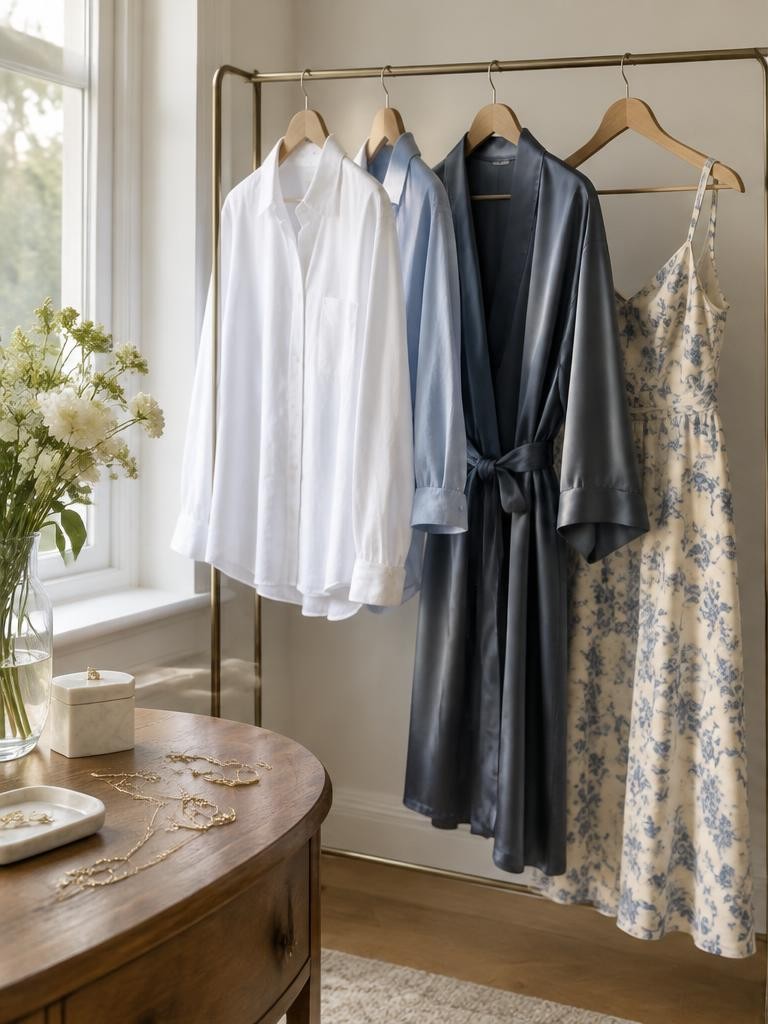
For relaxed warmth, try a substantial cotton shirt, soft trousers, and a knitted layer. For structured elegance, consider an opaque wrap-style dress secured comfortably, or a tailored jacket over a high-neck top.
Share photographs of garments on hangers if you want feedback without sending personal fitting pictures. The goal is a coherent visual story, not conformity to a gendered or body-specific wardrobe rule.
033. Start with clothes you already trust
Choose an outfit you have worn comfortably for more than a few minutes. Familiar clothes reduce uncertainty about shifting seams, scratchy labels, or difficult fastenings.
A matching lounge set can give clean shapes; a plain T-shirt and soft trousers can feel personal; an opaque midi dress can create a more formal portrait. Check that the clothes suit the room temperature and any mobility needs.
You do not need restrictive shaping garments to make a photograph successful. Fit means the clothing supports your comfort and intended appearance, not that your body must change to fit the clothing.
044. Test coverage in the actual movements
Try sitting on a chair, lifting your arms gently, leaning forward, and turning sideways. Check whether buttons pull, hems rise beyond your preference, or a neckline shifts.
Use a mirror or a simple test photograph if that feels comfortable. Look at opacity against a bright window as well as ordinary room light.
A fabric that seems solid indoors may behave differently when backlit. If a garment needs constant holding or checking, choose another one or add a secure opaque layer.
Plan coverage with the clothes themselves rather than depending on retouching or a photographer to conceal every movement.
055. Choose fabrics for comfort and texture
Matte cotton, fine knitwear, and softly textured fabrics often photograph predictably. Satin can create beautiful highlights but may show creases and bright reflections; sequins may distract from expression.
These are visual choices, not bans. For people already experiencing itchy skin, NHS guidance recommends loose cotton or silk clothing and avoiding tight or irritating garments.
That medical self-care guidance is not a general rule that everyone must wear those fabrics. Use materials you know you tolerate, and seek appropriate medical advice for persistent irritation rather than treating a photo session as a reason to ignore symptoms.
066. Coordinate colour with the room
Ask about background colours before packing. An oatmeal cardigan against a pale wall gives a low-contrast, gentle look; a deep green dress against the same wall separates more clearly.
Either can be effective. Choose colours you enjoy near your face and consider whether you want clothing to blend with or stand apart from the setting.
Small, repetitive patterns can sometimes produce moiré, an interference pattern that looks like unexpected ripples. Bring a plain alternative if you are unsure.
Avoid treating black as automatically slimming or white as automatically delicate: lighting, fabric, and personal preference matter more than slogans.
077. Build two outfits and one backup
A manageable set might include a shirt-and-trouser outfit, a knit dress with an optional cardigan, and a backup plain top. Keep accessories simple enough to change without disrupting the session.
Comfortable socks, clean indoor shoes, or other preferred footwear are all options; choose whatever works with the setting and your access needs. There is no need to buy heels or practise uncomfortable poses.
Lay the outfits out together and check that every piece has a partner. Packing fewer complete combinations is usually more useful than bringing a large bag of unrelated clothes and deciding under time pressure.
088. Prepare and pack without overcomplicating
Wash or clean garments according to their care labels and remove visible lint. Steam suitable fabrics safely, then transport them on hangers or folded with care.
Pack spare fastenings only if you know how to use them comfortably; do not rely on tight clips or improvised alterations against skin. Add water, any usual personal comfort items, and a warm layer for breaks.
Avoid trying unfamiliar skin products simply for the shoot. Arrive wearing something comfortable enough for travel.
Preparation should reduce stress, not become an expensive grooming checklist or a demand to change your normal appearance.
Try this
09Illustrative scenario: a fully clothed window session
An adult client wants quiet portraits in a room with cream walls and a blue chair. They choose a soft navy shirt with wide-leg trousers for seated photographs, followed by an opaque rust-coloured knit dress.
A cardigan provides another layer without creating a third full outfit change. Before the appointment, they agree to covered poses, private changing, and no behind-the-scenes recording.
The first test images show that the shirt buttons pull while seated, so they switch to the backup top. Nothing has gone wrong: the wardrobe test has simply helped the session adapt to the person.
Troubleshooting
10Mistakes and troubleshooting
If clothes wrinkle, try smoothing or changing position before asking for extensive editing. If a pale outfit disappears against the wall, change the background, add a contrasting layer, or adjust the light.
If a pattern produces moiré, use the plain backup and let the photographer test framing or distance. If a garment feels uncomfortable, replace it; “the photograph looks good” is not a reason to keep wearing it.
Avoid last-minute pressure purchases, extreme preparation routines, and comparisons with heavily edited reference images. A useful image should represent the agreed mood without making comfort the price of participation.
FAQ
11FAQ: privacy, shopping, and changing your mind
Do I need special clothing? No; ordinary outfits can create intimate, thoughtful portraits. Do I need to show skin? No. Can I change my mind about an outfit? Yes; tell the photographer and use a backup or stop. Must I allow portfolio publication? Do not assume that a session booking requires it: discuss image use and any separate release before agreeing. Ask how galleries are secured, who can access them, and how long files are retained. A private session can still involve online storage, so request clear answers rather than accepting an undefined promise that everything is “completely secure.”
Try this
12Exercise: the ten-minute wardrobe rehearsal
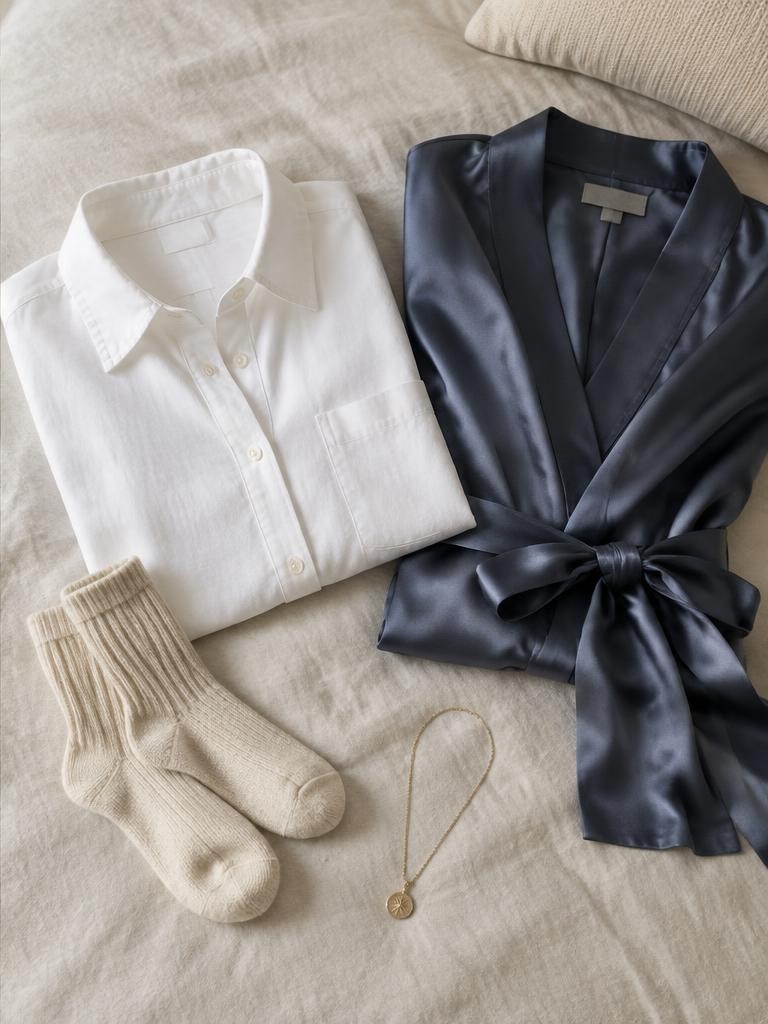
Lay two complete outfits and one backup on a bed or clean floor. For each outfit, name the mood, test sitting and standing, check opacity, and identify a comfortable footwear option.
Write down three non-negotiable boundaries and send them with your clothing plan. Finally, ask yourself whether you would still feel comfortable if this became the only outfit photographed.
If not, start with something more familiar. Use the Photography resources linked below for additional planning.
The finished wardrobe should make the session easier to enjoy, not function as a test of confidence, spending, or willingness to reveal more.
Sources & further reading
These references support the technical explanations. Exercises and starting settings are illustrative and should be adapted to your equipment and conditions.
Free resources from LensSuite
Was this guide helpful?