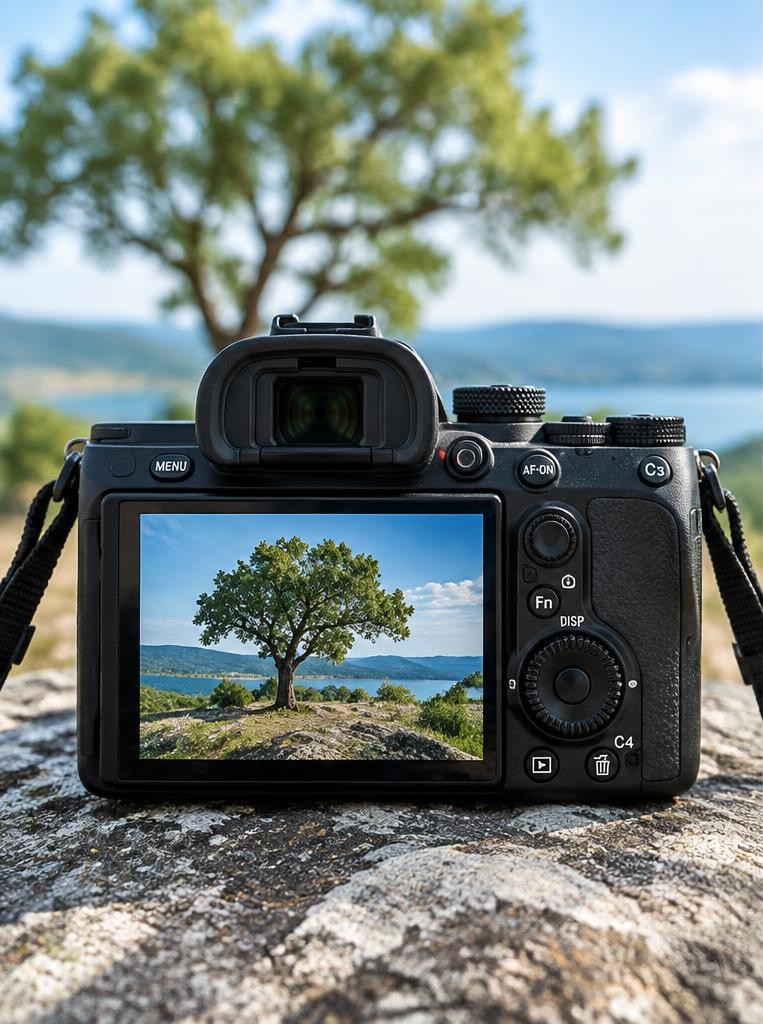
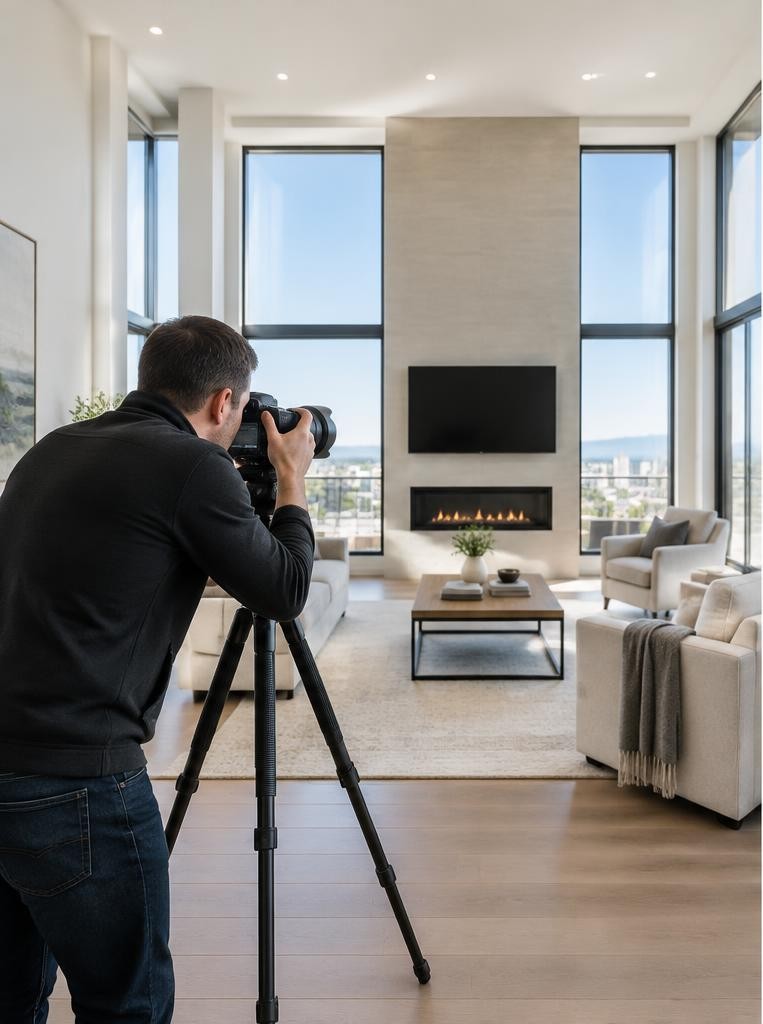
Professional real-estate photography can present a property’s rooms, layout and notable features clearly, giving prospective buyers or tenants a more useful first view before arranging a visit. It is not a guarantee of a faster sale, higher price or more enquiries. Its value lies in accurate, considered visual communication: photographs should help people understand what is actually there. A listing image is part of a larger decision process that includes description, location, price, inspection and professional advice. Photographs can invite further consideration, but they cannot replace a viewing or verify structural condition. Use images to represent the property fairly rather than to create an impression that cannot be confirmed in person.
01Consistency makes a listing easier to understand
A professional can plan a coherent sequence: exterior or entry, key shared spaces, bedrooms, bathrooms and distinctive features. Consistent colour, vertical lines and exposure help viewers move through the gallery without abrupt visual changes.
A balanced sequence can show relationships between spaces rather than presenting a set of disconnected attractive rooms.
Before photographing, ask the agent or owner which features are important and confirm the correct room names, orientation and any access limits. Create a shot list that answers likely questions while avoiding repetitive angles.
The aim is informative coverage, not the largest possible image count.
02Lighting and composition reveal real features
Mixed window light and interior fixtures can create colour casts and deep shadows. A photographer can select timing, exposure and supplementary lighting to make a room readable while preserving a believable appearance.
Careful camera height and alignment help keep walls and door frames from appearing unintentionally tilted. Wide-angle lenses can show room relationships, but extreme perspective can misrepresent scale.
Ask for a style that remains faithful to the property. Do not brighten windows into invented views, remove permanent features, or composite elements that imply a room has different dimensions.
Post-processing should clarify the photograph, not materially change what a reasonable viewer would understand.
03Prepare the property and coordinate access
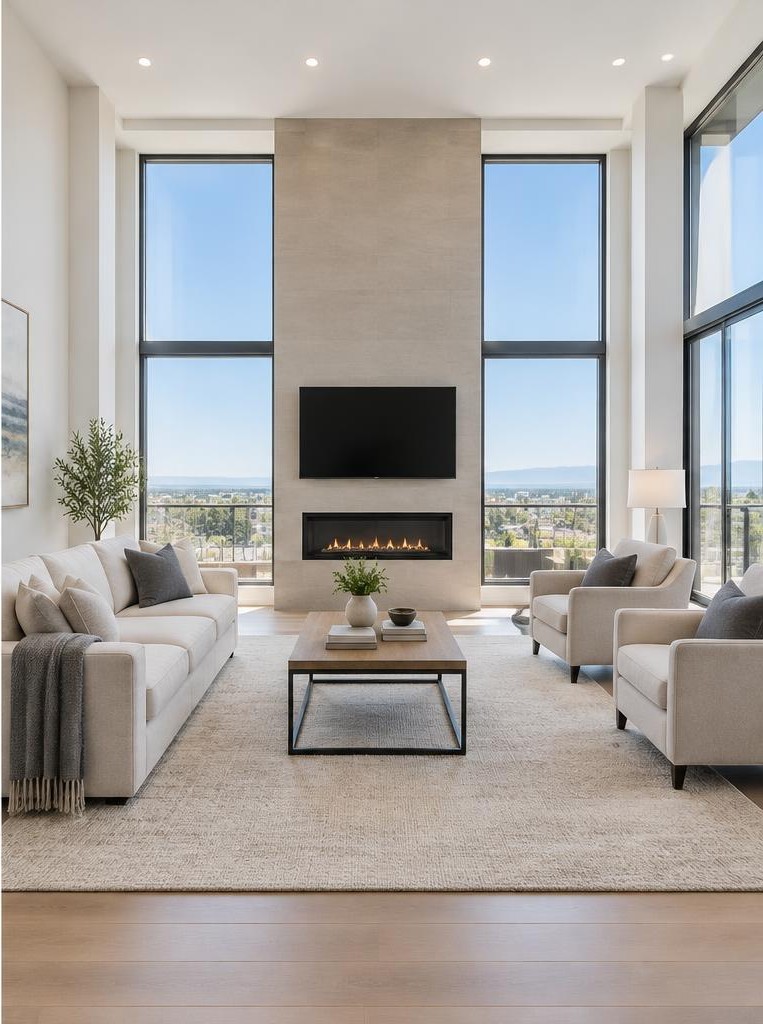
The strongest workflow begins before the camera arrives. Confirm access, rooms to photograph, occupancy, pets, security arrangements and the person authorized to approve images.
Ask the property contact to tidy surfaces, close toilet lids, remove sensitive paperwork and put away personal photographs where appropriate. Photographing a lived-in home requires discretion and respect for residents.
Agree how keys will be handled, when the photographer may enter and whether anyone must remain present. Do not publish security-sensitive details or identifiable personal information without permission.
If a property is occupied, explain the purpose and intended use of the images to relevant residents and follow applicable local privacy rules.
04Use a brief that defines deliverables and rights
A written brief should state the property address privately, shoot date, access contact, requested coverage, delivery format, turnaround expectation, fees and cancellation or rescheduling process. Clarify image licensing: who may use the photographs, for which listing or channels, for how long, and whether reuse in other marketing requires permission.
The photographer and commissioning party should not assume that payment automatically transfers every right.
Copyright ownership, licensing and property-image rules vary by jurisdiction and contract. The U.S.
Copyright Office explains that original photographs may receive copyright protection under U.S. law; it is a reference, not global legal advice.
Use qualified local advice where the rights or permitted uses are unclear.
05Professional workflow adds reliability
A dependable service includes confirming the appointment, arriving prepared, checking camera settings and equipment, following the shot list, backing up files and delivering the agreed selections. A real-estate agent may have a tight listing schedule, but a photographer should not promise a turnaround that has not been agreed and tested.
Establish a process for missed access, weather changes and urgent corrections.
Ask prospective photographers how they handle backups, reshoots, editing requests and delivery. Clarify whether drone, twilight or floor-plan services are included or provided separately.
If aerial work is proposed, verify that the operator and flight comply with the relevant aviation and privacy requirements in that location.
06Why accurate images support trust
A buyer who sees a realistic representation can better decide whether a property merits a visit. Misleading perspective, heavy retouching or omitted material context can create disappointment and undermine confidence.
Agents and owners should review images for factual accuracy: correct property, room, view and features. Report errors promptly rather than altering a photograph in a way that changes the facts.
Rules about property advertising and consumer protection differ. RICS guidance discusses professional conduct in real-estate agency, while local law and industry standards control in each market.
The practical principle is universal: do not use an image to imply a feature the property does not have.
07Compare professional and do-it-yourself approaches
A phone can be sufficient for an informal rental update or a small property where the person taking photographs has appropriate skills and time. A professional is more useful when image consistency, complex light, a large space, multiple listings or a specific delivery workflow matters.
Compare portfolios made for similar properties, not just the most dramatic image in a photographer’s gallery.
Ask about the number of edited images, included areas, travel, licensing, scheduling and any additional fees. Compare the full service rather than a headline price.
Professional status alone does not guarantee good work; assess technical quality, communication, accuracy and whether the style suits the property.
Worked example
08Hypothetical example: a listing with mixed light
Imagine an agent preparing a compact apartment for listing. In quick phone images, the window is bright white and the room appears unusually dark; the wide lens also makes a narrow hallway look much larger.
The agent commissions a photographer who schedules the shoot for available daylight, uses a more restrained viewpoint and balances interior and window exposure without replacing the exterior view.
The resulting set shows the room’s actual proportions and gives a clear sequence from entry to living area and bedroom. This fictional example illustrates the kinds of improvements a professional workflow may bring.
It does not demonstrate a guaranteed marketing outcome or imply that every property needs the same treatment.
09Common pitfalls when hiring or commissioning
Do not choose solely by the lowest price, assume all images include unlimited reuse, or expect extensive retouching without agreement. Avoid scheduling before the property is ready, failing to arrange access or leaving personal documents visible.
Do not request edits that materially misrepresent room size, fixtures, views or condition. Confirm the gallery is for the correct listing before publication.
Photographers should avoid taking images that reveal private documents, security systems or occupants without proper consideration. Agents should check images and captions together; a correct photograph can still be misleading if paired with an inaccurate description.
Both parties benefit from documenting the intended use and review process.
FAQ
10FAQ and a practical hiring checklist
Will professional photography guarantee a quicker sale? No; outcomes depend on market conditions, property, pricing, presentation and many other factors. Is wide-angle photography always better? No; it can communicate space but may distort proportions if used carelessly. Can the same images be reused later? Only as permitted by the relevant licence, contract and applicable rules.
Before booking, compare relevant portfolios, agree scope and access, confirm rights and delivery, prepare the property, set expectations for editing and designate someone to check accuracy. After delivery, verify the property and features before publishing. Professional photography is most useful when it makes the listing more informative and dependable, not when it makes an unsupported promise.
Sources & further reading
These references support the technical explanations. Exercises and starting settings are illustrative and should be adapted to your equipment and conditions.
- U.S. Copyright Office: What Photographers Should Know about Copyright
- RICS: Real estate agency and brokerage professional statement
- RICS: Property agency and management
Free resources from LensSuite
Was this guide helpful?