
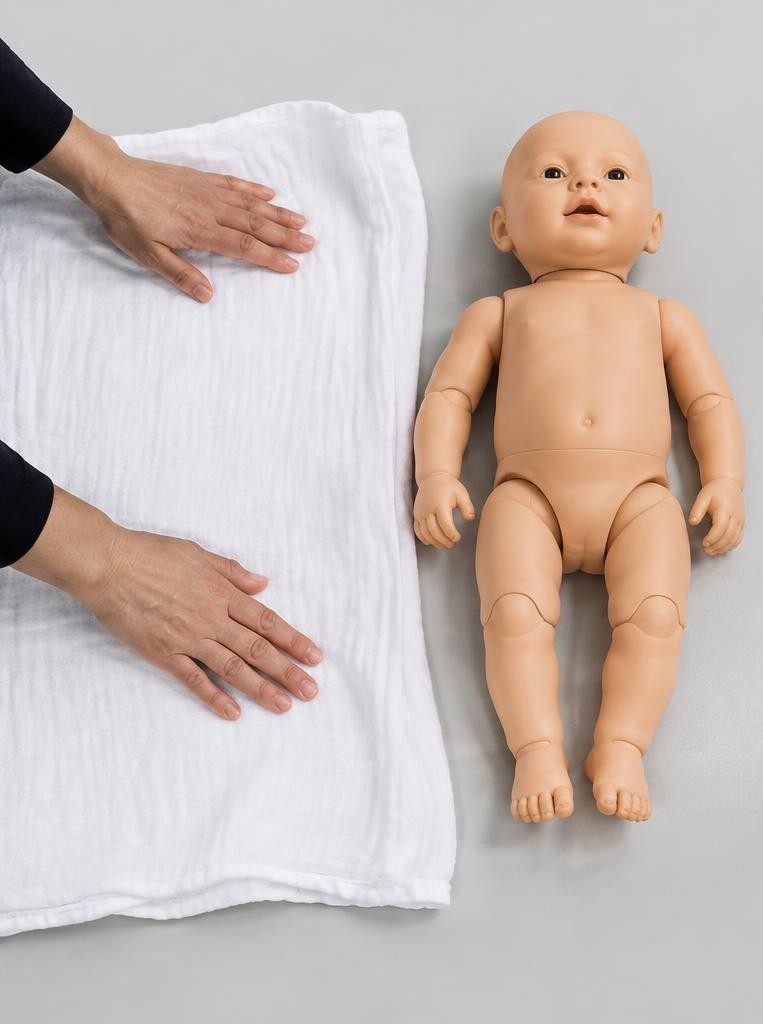
For beginners, the safe way to learn the photographic side of wrapping is to use an obvious plastic training doll. You can practise camera position, fabric texture and lighting without handling a real newborn. This article does not teach infant handling or certify anyone to wrap a baby. A real session needs an appropriately trained handler and the parent or caregiver's informed agreement. A smooth-looking wrap is never a reason to restrict breathing, movement or circulation. Do not use sedation, weighted fabrics or constricting pressure to make a photograph happen. If the concept depends on immobilising a baby, change the concept.
Try this
01Prepare a flat practice surface
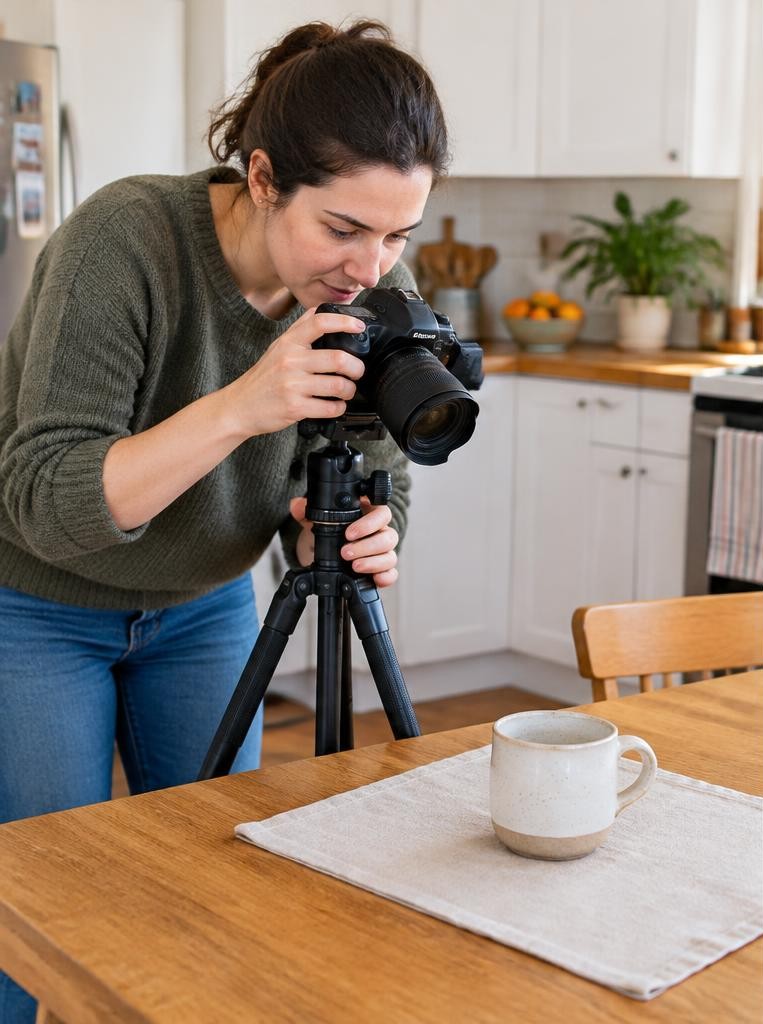
Place the doll on a stable, flat practice table, away from edges. Keep lights, straps and cables secure.
Lay a lightweight cotton cloth beside it and choose a plain background. This is a training arrangement, not an example of a safe infant sleep surface.
Take an unwrapped test image first. Check focus, cloth texture and the edges of the frame.
Completing these adjustments before any real session reduces time spent changing equipment while a caregiver is waiting.
02Study loose folds, not a restraint technique
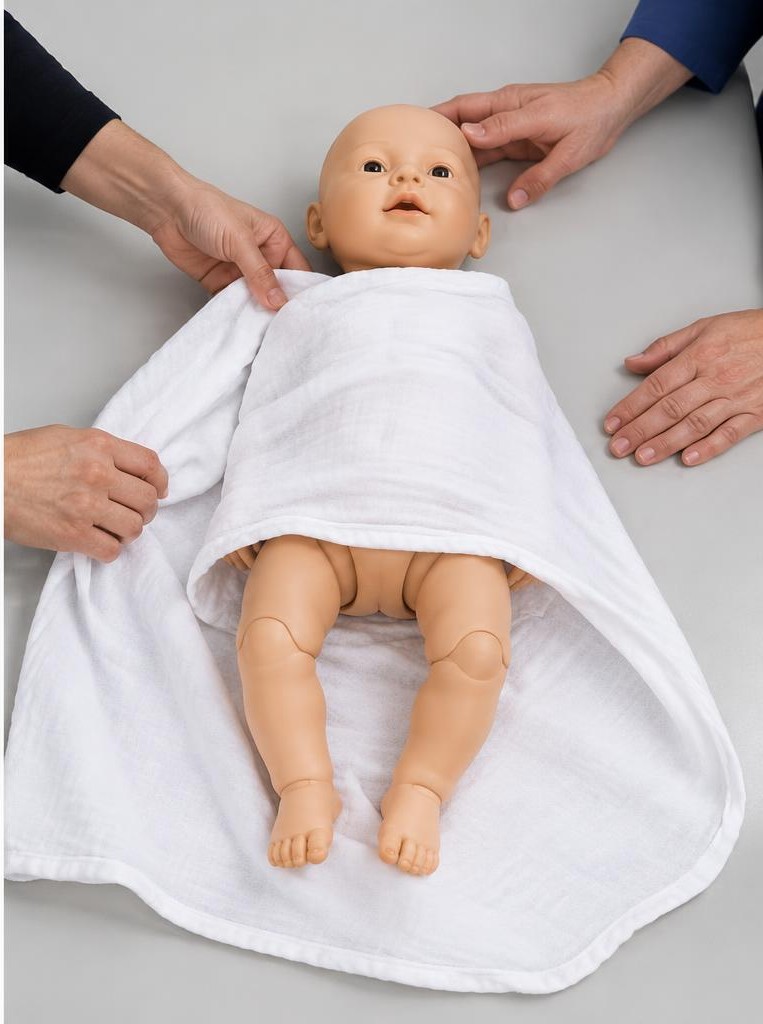
For the doll exercise, drape cloth loosely across the torso, leaving the face fully visible and the hips and legs unobstructed. Do not practise tight leg binding.
Turn a fabric edge into a gentle curve that guides attention toward the face rather than pulling it tight to remove wrinkles.
Make three doll frames: no cloth, a loose drape, and a closer crop of the cloth texture. Compare how much visual variety comes from framing rather than a different body position.
Doll practice only teaches photographic choices; it does not establish safe handling competence.
03Separate photography from safe sleep
A basket, beanbag, posing pillow, adult bed or styled photo surface is not a safe infant sleep space. A real baby must never be left unattended on a photographic surface.
When sleep is needed, the responsible caregiver should use the baby's appropriate sleep space.
AAP guidance calls for sleep on the back, on a firm, flat, noninclined surface, with soft objects and loose bedding kept out. Swaddling does not make an unsafe sleep arrangement safe.
Swaddling should stop when an infant shows signs of attempting to roll. Follow medical and caregiver guidance rather than copying an online pose.
04Use simple, broad light
Place the doll near indirect window light and photograph the side toward the window. A white card on the opposite side can lift shadows.
Move the card away if the folds disappear because the illumination becomes too flat. Keep hot lamps away from fabric.
Photograph one frame with side light and another with the camera nearer the light direction. The first usually reveals more texture; the second may make shadows less prominent.
These are doll-only comparisons, not directions to move an infant repeatedly for the camera.
05Choose settings that retain texture
For a static doll, try f/4 to f/5.6 as an illustrative starting range, adjusting for distance, lens and the sharpness you need. Use a stable tripod if permitted.
Focus on the nearer eye and inspect the image at magnification. A wide aperture can leave the far eye and cloth soft.
White fabric may lose detail when overexposed. Check highlight warnings rather than judging only the rear screen.
If the meter recommends 1/125 second and texture clips, a one-stop reduction to 1/250 at fixed aperture and ISO halves captured light. This arithmetic is a learning example, not a universal newborn exposure.
Try this
06A hypothetical practice session
Imagine a learner finds that a doll's drape looks wrinkled. Instead of tightening the cloth, they move the light, make fewer broader folds and crop closer.
The photograph becomes calmer without requiring a restrictive arrangement. They record the light position and repeat the same setup the next day.
If a similar visual problem arises with a real baby, the photographer should pause and defer to the trained handler. A caregiver-held portrait or a detail of a hand may be a better option.
The fictional example shows how to change the photograph rather than force a pose.
07Recognise reasons to stop
During a real session, stop when the caregiver requests a break, the infant needs attention, fabric approaches the face, the support is unstable or continuous supervision cannot be maintained. Changes in breathing, colour or responsiveness require immediate caregiver attention and appropriate medical help.
No portfolio image is worth continuing through distress. Do not remove visible safety support to imply an unsupported pose.
If an authorised composite is used, preserve originals and explain the construction where relevant. Simple truthful images are preferable to elaborate arrangements whose safety cannot be demonstrated.
FAQ
08FAQ and a practice checklist
Can a parent being nearby replace training? No. Presence alone does not make unsafe handling safe. Can a doll teach wrapping safety? No; it can teach framing and fabric appearance. Can a styled setup double as a nap space? No.
For your next doll exercise, prepare the surface, secure equipment, test exposure, keep the face and hips unobstructed, make wide and detail views, and label shared images as doll practice. For any real session, seek qualified instruction, keep a trained adult dedicated to the infant and let the caregiver lead every break.
Sources & further reading
These references support the technical explanations. Exercises and starting settings are illustrative and should be adapted to your equipment and conditions.
Free resources from LensSuite
Was this guide helpful?