
Photography was central to Masahisa Fukase’s relationships and identity, but saying it “ruined his life” reduces a complicated biography to a single cause. His story involves marital breakdown, reported alcohol misuse, loss and a disabling accident, alongside an extraordinary artistic legacy—not evidence that suffering is necessary for great photography.
01Who was Masahisa Fukase?
Fukase was born on 25 February 1934 in Bifuka, Hokkaido, into a family that ran a photographic studio. He studied photography at Nihon University in Tokyo and graduated in 1956.
The archive chronology records advertising work before his growing exhibition and publishing career.
His work appeared in the Museum of Modern Art’s New Japanese Photography exhibition in 1974. That same year, he helped establish the Workshop Photography School.
These milestones matter: he was an accomplished professional and experimental artist, not simply a tragic outsider discovered after death.
02A photographic life, not just a single masterpiece
The Masahisa Fukase Archives describes a practice built largely around series. Family, partners, cats and eventually his own body became recurring subjects.
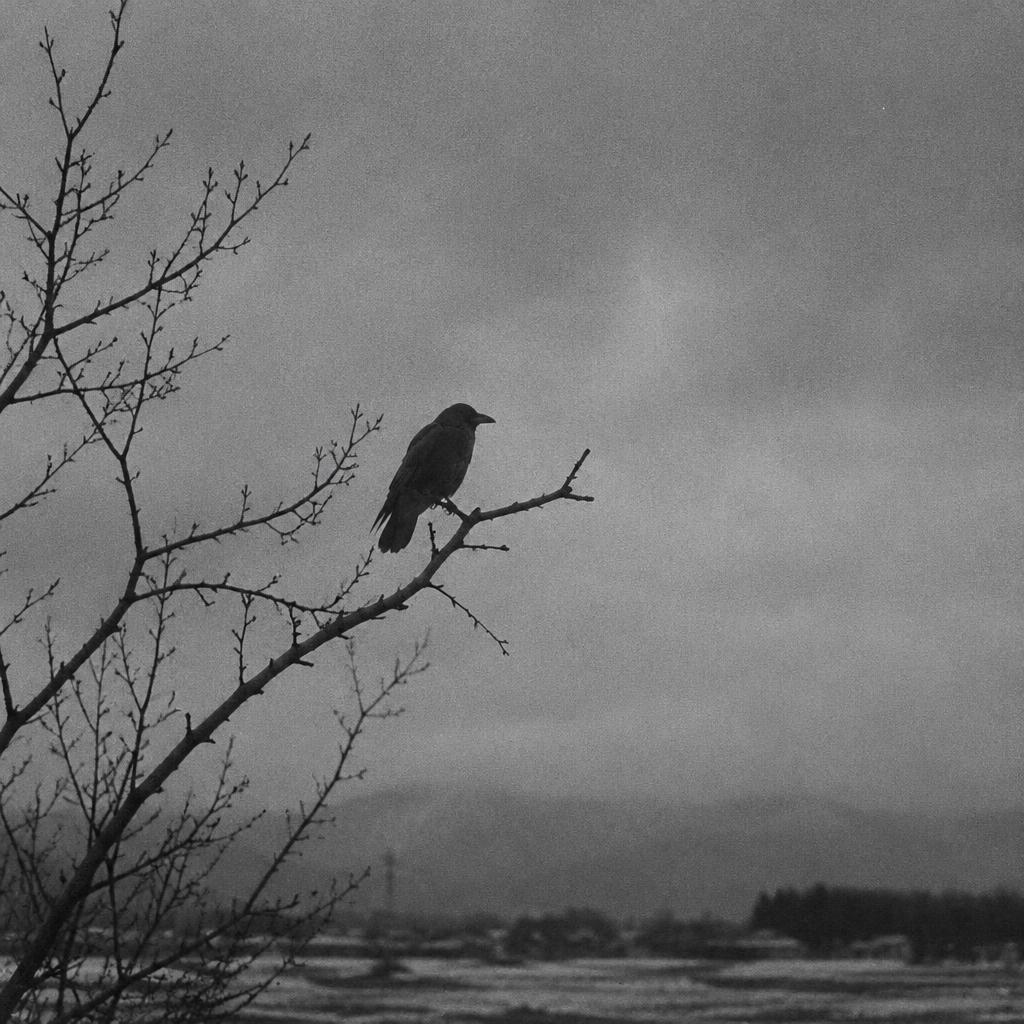
Images could be playful, theatrical or sombre; the dark atmosphere of Ravens is not his entire visual vocabulary.
For beginners, a series means photographs connected through a subject, question or approach. It allows meaning to develop across pictures rather than demanding that every frame explain everything.
Fukase’s long attention to familiar subjects is a more useful model than the myth of a permanently inspired genius.
03Yoko: marriage, collaboration and separation
The archive dates Fukase’s marriage to Yoko Wanibe to 1964 and their divorce to 1976. She became a central presence in his photographs, including the work published as Yohko in 1978.
Publication dates should not be confused with the dates a relationship was intact.
Sean O’Hagan’s Guardian account discusses the intensity of Fukase’s photographic attention to her. Read this as a relationship involving another person’s autonomy, not merely an artist losing his “muse.” The record supports strain and separation; it cannot justify a tidy verdict that the camera alone caused the divorce.
04How grief became Karasu, or Ravens
According to the archive timeline, Fukase travelled to Hokkaido just before the divorce in 1976, returning with photographs that developed into Ravens. Images appeared in Camera Mainichi in eight instalments from October 1976 to November 1982.
The archive identifies the broader series with 1975–1985.
Sokyu-sha published Karasu in 1986. Its birds, dark landscapes, grain and unstable-looking forms invite readings of loneliness and dislocation.
The work is often understood through marital grief, but the sequence is an artistic construction, not an unfiltered medical record of the photographer’s state of mind.
05How acclaimed was the book, exactly?
In 2010, Ravens topped the British Journal of Photography’s critics’ poll of the best photobooks of the previous 25 years. BJP’s archived report and contemporary Guardian coverage verify that specific claim.
This was a particular expert poll, not an objective award for the greatest photobook ever made.
The archive lists later editions, including MACK’s 2017 publication. Those editions help explain why readers encounter different English titles and publication dates.
Distinguish the original 1986 book from subsequent reissues when borrowing, buying or citing it.
Worked example
06Worked example: reading a Ravens sequence
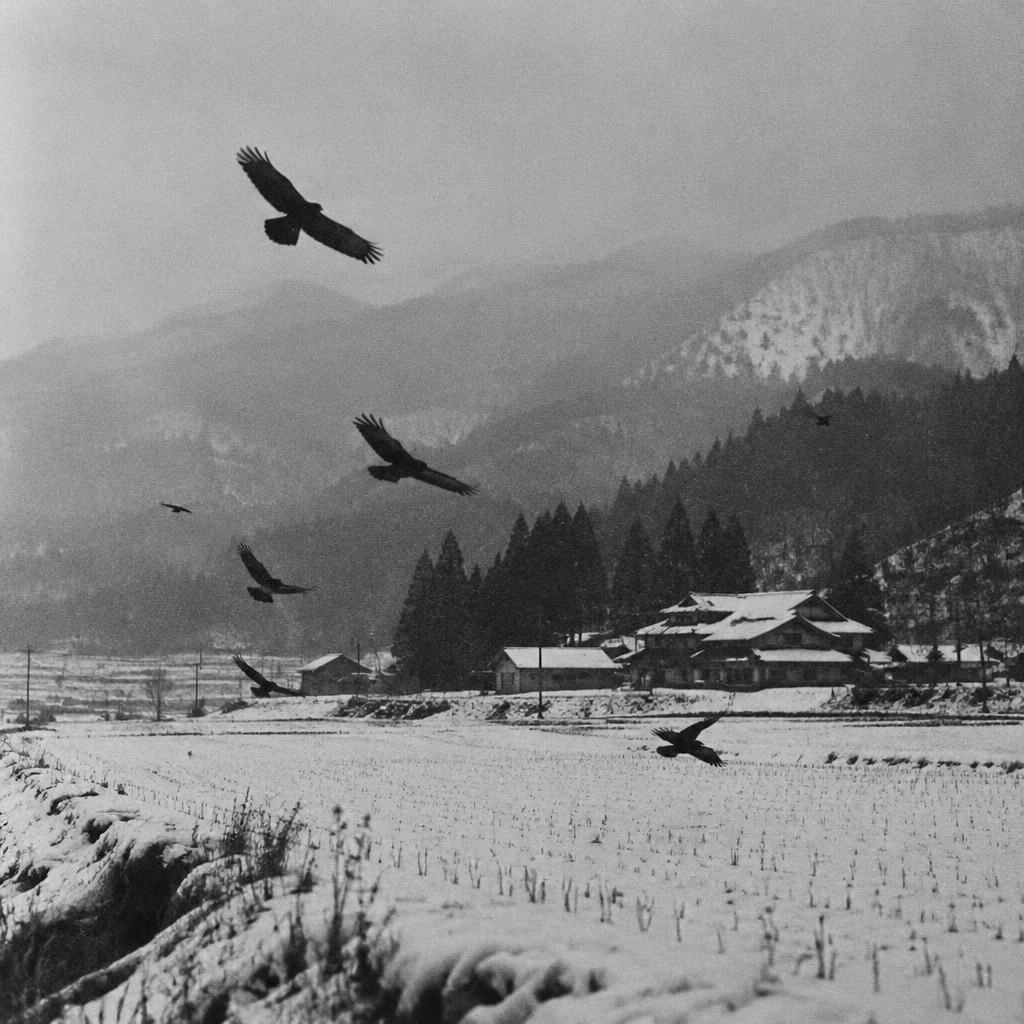
Use an authorised reproduction or library copy, then compare three consecutive images. First record visible facts: where dark forms sit, how much empty space remains and whether edges are sharp or blurred.
Next ask what changes as you turn the page.
For example, if a crowded flock follows a solitary bird, you might read a movement between isolation and uneasy company. That is a conditional analytical example, not a claim about a particular spread.
Test your reading against the actual sequence. Avoid assuming that every dark bird has one fixed symbolic meaning.
Try this
07Alcohol, obsession and the limits of explanation
Accounts of Fukase’s life describe heavy drinking and emotional distress. These belong in a responsible biography, but they should not become a seductive recipe for creativity.
Nor can a writer retrospectively diagnose him from pictures or identify a single cause for his behaviour.
Repeatedly photographing something is not itself evidence of illness. The important distinction for a learner is between sustained attention and patterns that damage health, safety or relationships.
Admire the seriousness of the work without turning harmful behaviour into proof of artistic authenticity.
08The 1992 fall and his death in 2012
On 20 June 1992, Fukase fell down the stairs of a bar and suffered severe brain damage. The archive states that he then spent 20 years in care, unable to look after himself.
He died on 9 June 2012, aged 78.
Some institutional accounts, including the Smithsonian’s, describe a coma lasting until his death. The archive’s wording is more specific about disability and care without supplying a continuous clinical diagnosis.
“A fall left him permanently brain-injured and ended his working life” is the safer summary of the established facts.
09The 2024 revival was part of a longer rediscovery
Interest did not suddenly begin in 2024. The archive was established in 2014, and subsequent publications and exhibitions revealed work beyond Ravens, including colour experiments and performative self-portraits.
Its publications list records a retrospective volume in 2023.
A concrete 2024 example is Private Scenes: Masahisa Fukase at Jimei × Arles, documented by Three Shadows. The presentation included 376 works spanning his career.
Calling it part of a continuing retrospective revival is more accurate than claiming it was the first rediscovery of his work.
10Illustrative reflection: dedication without imitation
Imagine a beginner who sees Ravens and decides that only painful subjects count as serious photography. After studying Fukase’s cats, family pictures and experiments, they reconsider.
A month-long project about a familiar neighbourhood can also sustain close attention.
This is an illustrative reflection, not a documented student story. Its point is practical: borrow a working method—returning, observing, editing—not a biography.
An ordinary subject photographed with curiosity may lead to more honest work than borrowing another artist’s symbols of grief.
Troubleshooting
11Decision: deep commitment or unhealthy fixation?
Choose commitment when a project has a manageable schedule, continuing consent from subjects and room for life outside photography. Pause or change direction when participation becomes coercive, exhaustion creates safety risks or alcohol becomes part of the working routine.
If a series feels emotionally intense, set a stop time and discuss boundaries before photographing loved ones. A camera cannot replace healthcare or relationship conversations.
When distress or drinking is becoming difficult to manage, seek qualified local support rather than trying to transform every difficulty into an image.
FAQ
12Troubleshooting and frequently asked questions
Why do my photographs look gloomy but say little? Dark processing is a surface treatment. Look for relationships between pictures, repeated forms and meaningful changes in distance or moment.
Was Ravens made entirely after the divorce? Avoid that simplification: the archive dates the series 1975–1985 and the pivotal journey to just before the 1976 divorce.
Did he only photograph ravens? No; family, Yoko, cats and self-portraits were substantial subjects.
Was the accident suicide? The cited institutional accounts describe a fall, not an established intentional act.
Try this
13A safe practice plan and further reading
Start with the archive biography, timeline and publications list. Read BJP’s original poll report for the acclaim claim, then compare the Smithsonian overview with the 2024 exhibition account.
Separating chronology, criticism and retrospective interpretation makes the biography clearer.
For practice, spend one week photographing a nearby subject on three short visits. Select six images and sequence them in two different orders.
Ask how the mood changes. Set a time limit, respect anyone who declines participation and write a short statement about the work without borrowing Fukase’s suffering as your own.
Sources & further reading
These references support the technical explanations. Exercises and starting settings are illustrative and should be adapted to your equipment and conditions.
- Masahisa Fukase Archives: Biography
- Masahisa Fukase Archives: Lifetime
- Masahisa Fukase Archives: Publications
- Smithsonian: Fukase Masahisa
- BJP: Ravens Tops All Photobooks in Poll (archived)
- The Guardian: Ravens and the 2010 Poll
- The Guardian: Fukase and Yoko
- Three Shadows: Private Scenes, 2024
Free resources from LensSuite
Was this guide helpful?