If this phrase comes from a multiple-choice question, the answer options are needed to select an option. The explanation here distinguishes the documented exhibition from broader documentary practice. New Documents was a 1967 Museum of Modern Art exhibition presenting Diane Arbus, Lee Friedlander and Garry Winogrand. It is an influential historical reference, not the origin of all documentary photography. The phrase ‘new documentary photography’ can also be used loosely for contemporary practice, which is much broader. Documentary photographs can describe people, places or events, but their label does not guarantee neutrality or completeness. Framing, timing, selection and captions influence what viewers understand. Study context alongside visual appearance.
01What MoMA's exhibition proposed
Curator John Szarkowski described a documentary approach directed toward personal ends: knowing the world rather than simply persuading viewers to reform it. That interpretation helps explain the exhibition's historical framing.
It should not become a rule that every earlier documentary photographer pursued reform or every later one rejected it.
The museum selected particular artists, photographs and interpretive language. Those institutional choices shaped reception.
When reading the exhibition history, distinguish the actual works from the claims used to group them.
02Three photographers, different visual languages
Arbus is associated with direct portraits that invite close attention to people and social categories, while raising questions about the photographer's and viewer's gaze. Friedlander explored layered structures involving signs, reflections, shadows and the photographer's presence.
Winogrand observed public life through energetic framing and gesture.
These are entry points, not complete biographies or interchangeable styles. Examine individual works with their collection information.
A photograph may complicate a broad description rather than neatly illustrate it.
03Avoid a simple old-versus-new split
Documentary work can combine artistry, observation, advocacy and personal perspective. A formally inventive image can address social conditions; an image made for reform still reflects the maker's decisions.
No single exhibition replaced every previous approach.
‘New’ refers to a historical presentation in the 1960s. It is not a claim that the work remains new today.
Read curator statements as situated interpretations and compare them with primary materials and later scholarship.
Try this
04Contemporary documentary practice is plural
Today the field includes journalism, long-term projects, personal archives, community-led work and collaboration with participants. Digital circulation changes audiences, but technology alone does not establish credibility.
A rough black-and-white frame is not automatically more truthful than a polished colour photograph.
Ask who made the image, how they gained access, what captions establish and who controls publication. Consider what participants understood about use and whether sharing creates risk.
Ethical quality depends on specific decisions, not simply the period in which work was made.
05Compare photographs with five observations
Choose a publicly accessible New Documents-related work with trustworthy context and a contemporary documentary image. For each, record subject, setting, framing, gesture and relationships between foreground and background.
Then write three things the image alone cannot establish.
Check what the caption or archive supplies. Do not compare the pictures as if they document the same event when they do not.
Finish with a comparison of choices rather than a verdict that one style is inherently truthful.
Try this
06An illustrative contemporary street exercise
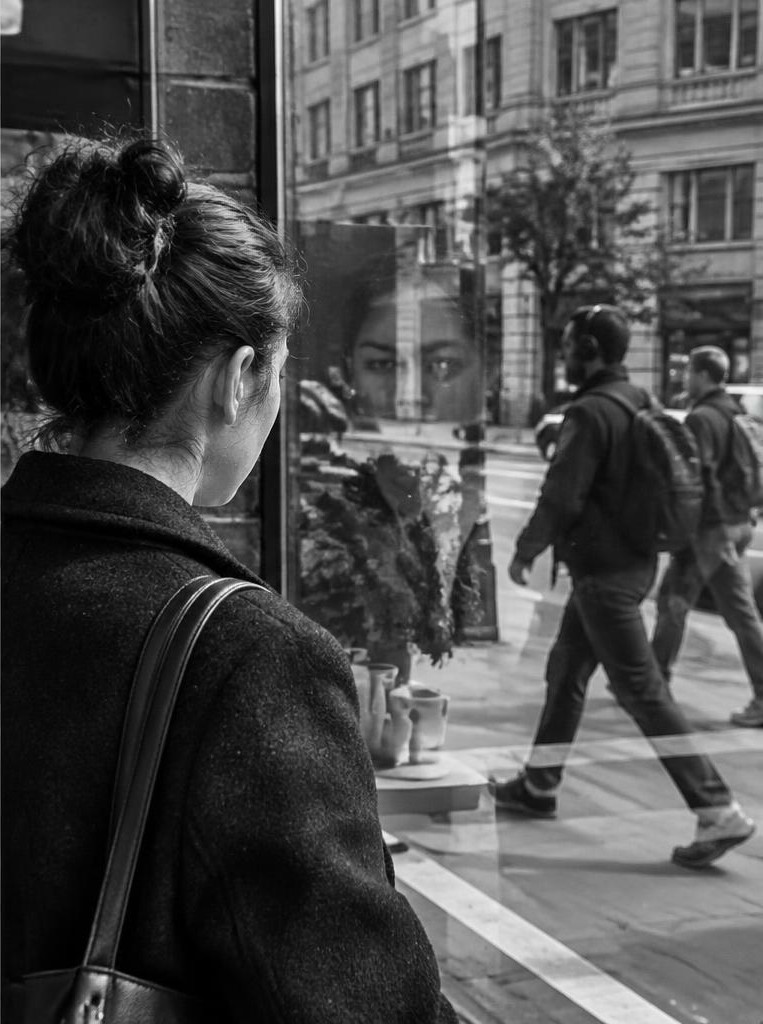
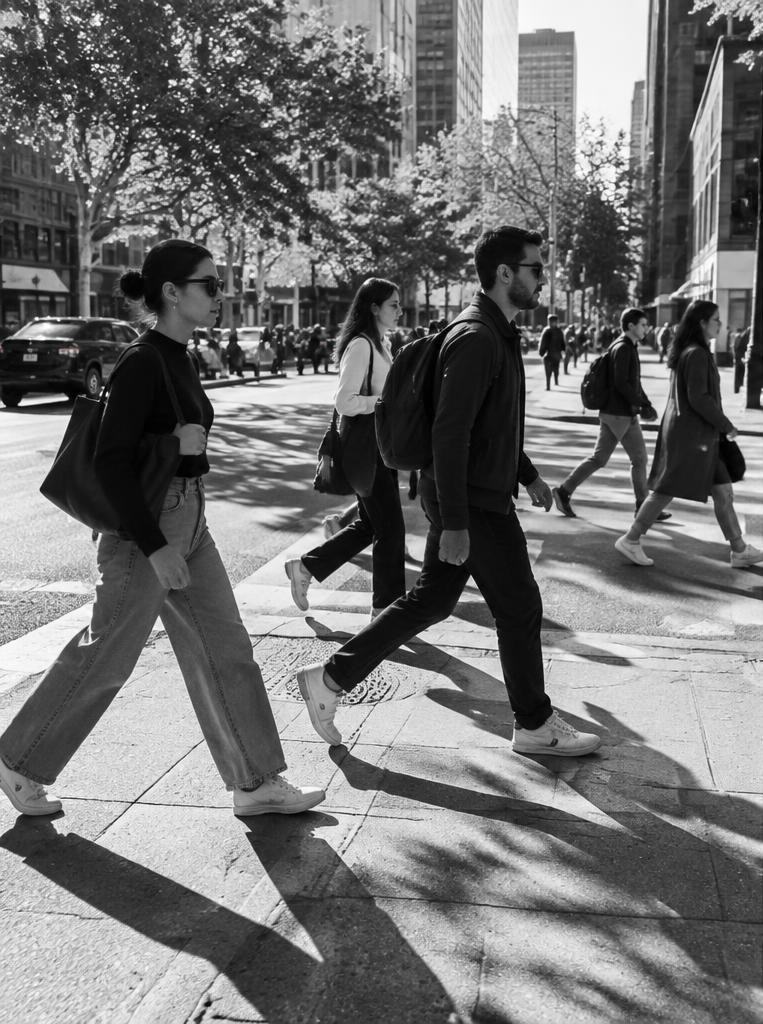
Imagine a learner makes a permitted street study of pedestrians and a shop-window reflection. A wide frame establishes the street; a second explores reflected layers; a third isolates a gesture.
They label the work as a contemporary personal exercise rather than implying an association with the 1967 exhibition.
In review, the learner notices that cropping removes the shopfront and makes a reflection look like a separate event. They retain context in the sequence and write a factual caption.
This hypothetical scenario and the generated monochrome images illustrate learning; they are not archival evidence or photographs by the exhibition's artists.
07Preserve meaning when editing and sharing
Cropping, sequencing and captions can change implications even without changing pixels. Avoid generating or combining factual content while presenting the result as an unaltered documentary record.
Explain illustrative, staged or composite work honestly.
Respect local rules, privacy and potential harms, especially where people are vulnerable. Where appropriate, explain methods and collaboration.
An attractive image does not override accurate context or a participant's safety.
FAQ
08Questions to take into further study
Did New Documents invent documentary photography? No. Were its three artists alike? No; their approaches differed. Does monochrome prove authenticity? No. Does an image contain the whole truth? No photograph can include every relevant fact.
Use MoMA's exhibition overview and contemporary ethics resources as starting points. Compare visible evidence, captions, provenance and authorship. The lasting lesson is not a formula to copy, but a way to study how personal vision, institutional framing and accountability shape documentary understanding.
Sources & further reading
These references support the technical explanations. Exercises and starting settings are illustrative and should be adapted to your equipment and conditions.
- MoMA: New Documents exhibition
- MoMA: New Documents, fifty years later
- World Press Photo: Code of ethics
Free resources from LensSuite
Was this guide helpful?