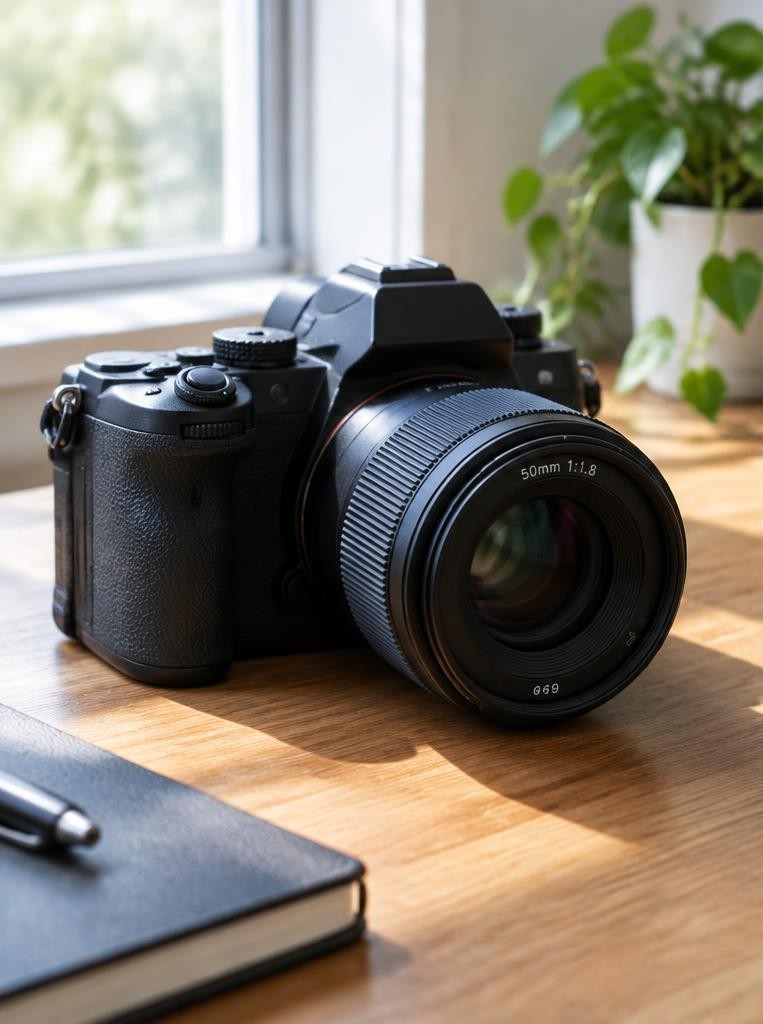
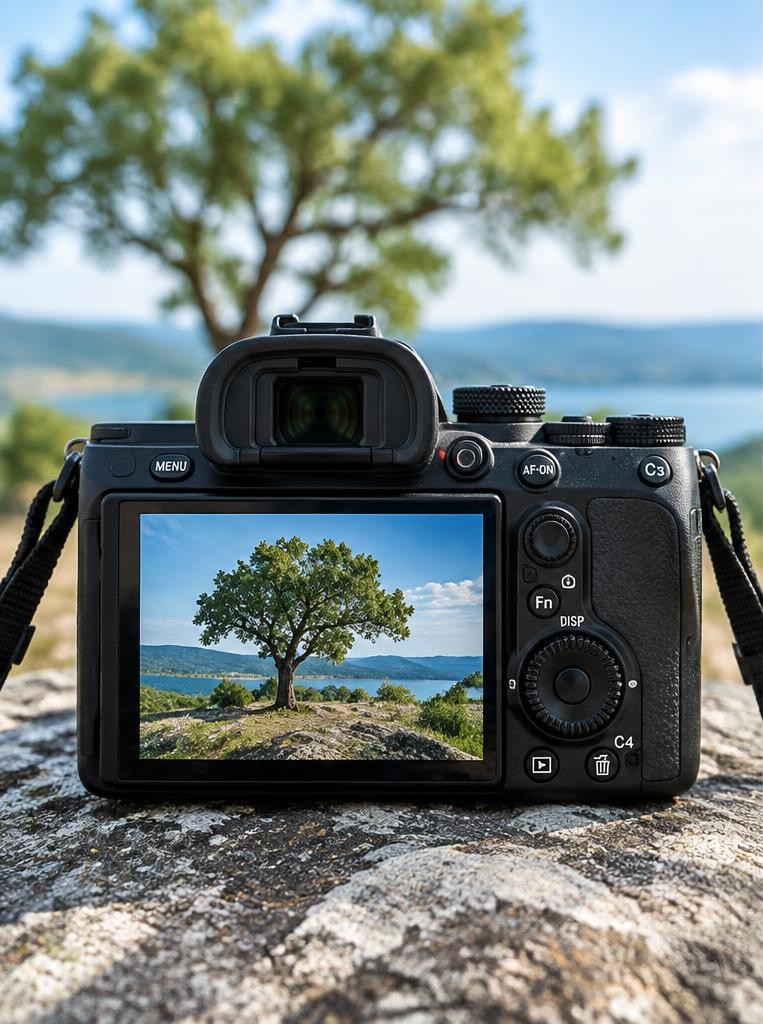
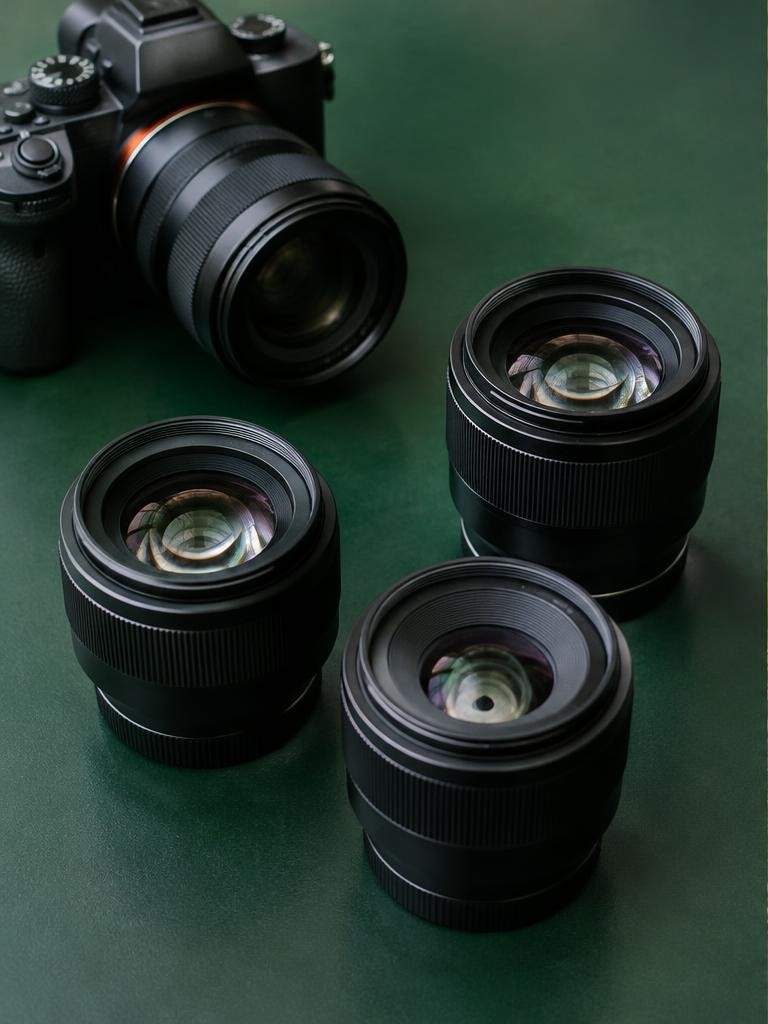
There is no single best portrait lens for every photographer. Choose a lens that gives your desired framing from a comfortable camera-to-subject distance, fits your camera and sensor format, and supports the light and subject movement you encounter. A moderate telephoto can suit individual head-and-shoulders portraits, while a normal or wider lens may be more practical for groups and environmental portraits. Begin with the photographs you need to make rather than a product hierarchy. This guide explains selection criteria and verified manufacturer specifications; it does not report hands-on testing or rank products.
011. Define the portrait before the focal length
Decide whether you need a close headshot, a three-quarter portrait, a full-length image, a group or a person within a meaningful environment. These frames require different amounts of surrounding space.
Note the smallest location you regularly use, the background distance available and whether you must move quickly between compositions. Consider communication too: a very distant camera position may make directing a quiet conversation harder.
Write down two recurring assignments and their practical constraints. A lens that solves your most frequent task is usually a more useful starting point than an extreme specification used only occasionally.
022. Separate perspective from angle of view
Perspective is governed by camera position relative to the scene. Focal length and sensor size determine the field of view from that position.
If you keep the camera’s viewpoint fixed, changing focal length changes framing, not the underlying near-to-far size relationships. Moving closer to fill the frame makes nearer facial features relatively larger; moving farther away reduces those differences.
Canon’s perspective examples pair focal lengths with changing subject distances, so both variables must be considered when interpreting them.
Do not describe every close-up facial exaggeration as an optical defect of a wide lens.
033. Choose distance first when facial proportions matter
For a tightly framed portrait, start by finding a camera distance that gives the facial relationship you want and allows comfortable interaction. Then choose a focal length that frames appropriately from there.
If a nose looks disproportionately prominent, step back and reframe rather than assuming a different lens at the same viewpoint will automatically correct it. Lens distortion is a separate optical issue and may also affect the image, especially near frame edges.
Keep faces away from extreme edges when working wide unless the effect is intentional. Review the whole composition, not just the central face.
044. Translate field of view across sensor formats
Focal length is a physical lens property; attaching the lens to a smaller sensor does not turn it into a different focal length. Crop factor is useful for comparing angle of view.
For example, a 50mm lens on a camera with a 1.5× crop factor gives an angle of view broadly comparable to a 75mm lens on full frame: 50 × 1.5 = 75. It remains a 50mm lens.
Equivalent framing does not by itself make depth of field or total captured light identical, so avoid using a single equivalence number to describe every aspect of rendering.
055. Compare practical focal-length roles
On full frame, a 35mm lens can help include a room or work environment, while a 50mm lens offers a useful starting point for varied portrait framing. An 85mm lens often supports tighter individual portraits from farther away, and longer options require more working room for equivalent framing.
These are tendencies, not rules or rankings. On smaller sensors, compare equivalent fields of view rather than copying the same numbers blindly.
A group in a small room may favour a wider option, but arrange people and camera distance carefully to avoid exaggerated near-to-far differences.
066. Understand aperture without chasing the widest setting
A wider maximum aperture can help in low light and provides more control over shallow depth of field, but the widest setting is not automatically the right portrait setting. At close distances, a sharply focused near eye may coexist with a visibly soft far eye.
Groups require attention to how faces are arranged relative to the focus plane. Stop down when the desired depth requires it, and consider shutter speed and ISO together.
Background appearance also depends on subject distance, background distance, framing and lens design, not simply the smallest f-number printed on the barrel.
077. Choose a prime or zoom for the workflow
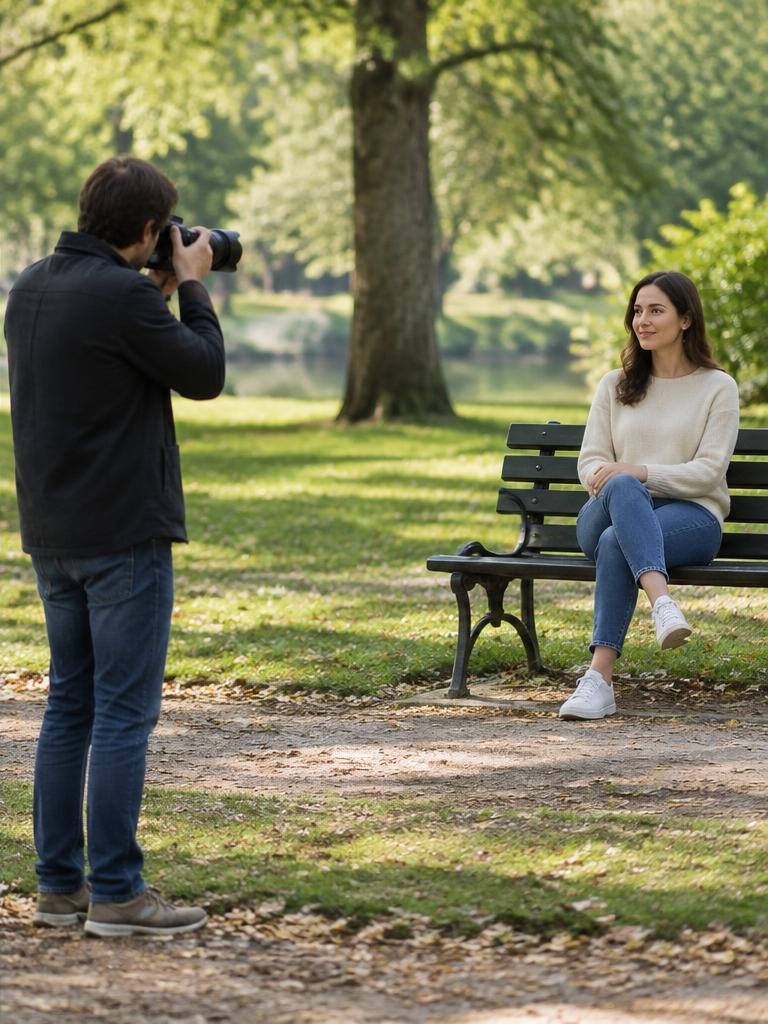
A prime offers one focal length, encouraging deliberate positioning and a consistent field of view. A zoom allows rapid framing changes when space, event timing or subject movement limits repositioning.
Neither category guarantees better photographs or superior optical performance in every model. Compare the actual size, weight, maximum aperture, close-focus capability and compatibility of the lenses you are considering.
If you already own a suitable zoom, review which focal lengths you use for portraits before selecting a prime. Renting or borrowing through a reputable source can help assess handling, but this guide makes no rental-based test claims.
08Illustrative scenario: a small portrait room
A fictional photographer has a room only four metres deep, and some of that space is occupied by the background and subject. They want full-length portraits and close headshots.
Instead of assuming an 85mm lens will serve both equally well, they mark the usable camera positions and preview framing with an existing zoom. A shorter setting fits the full-length composition from the available distance; a longer setting serves the tighter frame.
The scenario does not establish a universal room-size threshold. Actual framing depends on sensor dimensions, orientation, subject size and the usable distances between camera, subject and background.
098. Check autofocus and movement requirements
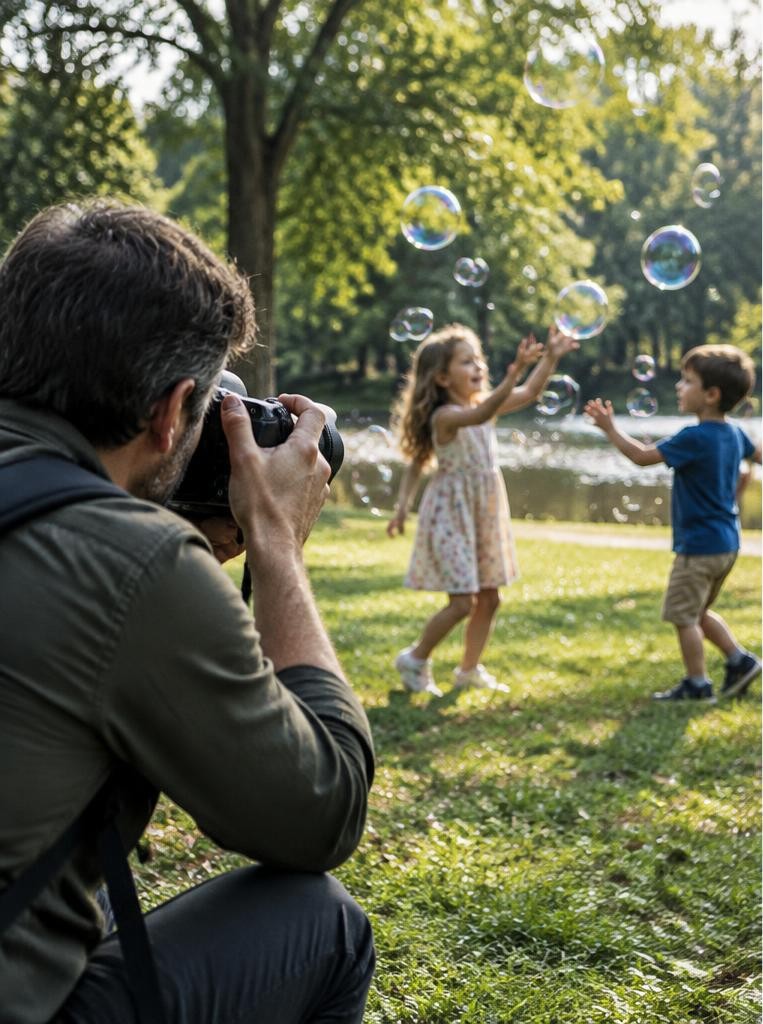
For children, walking portraits or rapidly changing expressions, autofocus compatibility and camera-body behaviour can matter as much as maximum aperture. Verify the mount, supported autofocus functions and any limitations associated with adapters or firmware.
Eye detection does not remove the need to check focus placement and choose suitable settings. Subject movement also requires an appropriate shutter speed.
Optical or in-body stabilisation can reduce the effects of camera shake, but it does not freeze a moving person. Evaluate the complete camera-and-lens system rather than treating one stabilisation or autofocus specification as a guaranteed success rate.
109. Read manufacturer features precisely
Canon lists its RF85mm F2 Macro IS STM with an f/2 maximum aperture, maximum magnification of 0.5×, a minimum focusing distance of 1.15 feet and optical image stabilisation. These are manufacturer specifications, not independent findings about portrait performance.
A 0.5× maximum magnification can be relevant for close details, but it does not mean every portrait should be made near the minimum focusing distance. Confirm where focusing distance is measured in the documentation, and distinguish minimum focus distance from the clear working distance in front of the lens.
1110. Use simple calculations to clarify trade-offs
At the same f-number, a longer focal length has a larger nominal entrance-pupil diameter: 85mm divided by f/2 gives 42.5mm, while 50mm divided by f/2 gives 25mm. This arithmetic alone does not predict the complete background rendering, lens dimensions or optical quality.
For exposure planning, changing from f/2 to f/2.8 reduces light reaching the sensor by roughly one stop at unchanged shutter speed and ISO. You might compensate with twice the exposure time or higher ISO, but a moving subject may rule out the slower shutter.
Treat calculations as decision aids, not image-quality rankings.
1211. Inspect handling and compatibility before committing
Confirm the exact lens mount and whether the image circle covers your sensor. Check filter size, weight, physical length, control layout and any documented weather-resistance conditions.
Think about how the combination balances during a long session and whether its minimum focusing capability suits details as well as faces. For video portraits, investigate documented focusing behaviour and audio needs separately rather than assuming a stills-oriented choice is ideal.
Avoid equating a feature name with a guaranteed result. Manufacturer information can verify that a function exists, but it does not establish comparative performance without suitable evidence.
FAQ
13Troubleshooting, FAQ and comparison exercise
If faces look stretched, review camera distance and subject placement before blaming focal length alone. If eyes are soft, distinguish focus error, insufficient depth of field, camera shake and subject movement. If backgrounds remain busy, increase subject-to-background separation where practical or change the viewpoint.
Is 85mm always best? No: sensor format, framing and space change the answer. Does stabilisation freeze motion? No. Exercise: photograph a cooperative subject from one fixed viewpoint at two focal lengths, cropping the wider image for comparison. Then change camera distance to maintain framing. Compare perspective separately from depth of field and detail, and record the conditions without declaring a universal winner.
Sources & further reading
These references support the technical explanations. Exercises and starting settings are illustrative and should be adapted to your equipment and conditions.
Free resources from LensSuite
Was this guide helpful?